

Luxury is one of the most claimed and least earned words in branding. Almost any brand can put it on a website, a price list or an Instagram bio. Far fewer can hold it once you start scrolling. The real difference in luxury vs mass-market brand positioning is not price, heritage or materials. It is behaviour, and nothing exposes that behaviour faster than the content a brand chooses to publish.
A brand can call itself luxury all day. Then it posts a stock photo with a sale sticker, a templated quote on a beige square, a caption that ends in ‘DM to order’, and the spell breaks in half a second. The audience does not read the word luxury. They read the behaviour, and they quietly reprice the brand in their heads.
This piece is about that gap. What actually changes when a brand is positioned at the top, why so many ‘luxury’ brands give themselves away, and what the understated, quietly confident ones do instead.
Luxury is a position, not a price
Positioning is simply the place a brand occupies in someone’s mind relative to everything else. Mass-market positioning competes on access: more reach, more range, more offers, less friction and a lower price. It wins by being available to as many people as possible. Luxury positioning competes on the opposite. It trades in desirability, restraint, meaning and the quiet sense that not everything is for everyone.
This is why a higher price tag does not make a brand luxury. Price is the outcome of positioning, not the cause of it. A brand earns the right to its price through how it behaves, how it looks, how it speaks and how consistently it holds its world together. Put a premium price on mass-market behaviour and you do not get luxury. You get an expensive version of ordinary, and customers can feel the difference instantly.
Understanding this is the whole game. Most marketing is built for mass-market mechanics, reach, frequency and conversion, and when those same mechanics are pointed at a premium brand they quietly drag it back down the ladder. It is one of the reasons so many agencies misread luxury brand marketing, applying the volume playbook to brands whose entire value depends on restraint.
The tell is always the content
If you want to know how a brand is really positioned, ignore the bio and look at the feed. Content is where positioning is proven or lost, because it is the part of the brand the audience actually sees most often. A beautiful logo and a confident price list can suggest luxury. A week of posts will confirm or quietly contradict it.
The brands that claim luxury and behave mass-market tend to give themselves away in the same handful of ways:
- Generic stock imagery that could belong to any brand in the category
- Templated graphics, the same beige canvas, the same quote layout, the same arrows and stickers everyone else is using
- Discount-led captions, where almost every post eventually asks for the sale
- Posting for the algorithm, chasing trends, sounds and formats that have nothing to do with the brand
- Volume over care, posting daily because someone said you should, rather than because there is something worth saying
- No world at all, a feed that reads as a pile of individual posts rather than one coherent atmosphere
None of these are disasters on their own. Together, they tell the audience that the brand is competing on attention and price, which is mass-market behaviour, however premium the product on the table. The audience rarely articulates it. They simply feel that something is a little cheaper than it claims to be, and they adjust what they are willing to pay accordingly.
Luxury content does the opposite. It is slower, quieter and far more consistent. It trusts the audience to understand without being shouted at. It would rather post less and mean more. The restraint is not laziness. It is the message.
What actually changes when you position a brand at the top
When a brand is genuinely positioned as luxury, a few things change, and they change on purpose rather than by accident.
- Restraint replaces volume - the brand says less, and what it does say is considered. Space becomes a feature rather than a gap to fill, and silence is allowed to do some of the work.
- Consistency becomes non-negotiable - every touchpoint, the website, the packaging, the captions, even the replies to comments, feels like it came from the same hand. This is what people mean by a brand world, and it is the single hardest thing for a mass-market brand to imitate convincingly.
- Emotion leads, information follows - mass-market content explains and persuades. Luxury content makes you feel something first, then lets you find the detail if you want it. The specification is still there. It simply is not the headline.
- Price is held, not discounted - cutting price is the fastest way to tell an audience it was never real. Luxury brands protect perceived value by almost never discounting, and when they want to widen access they create a lower entry product rather than a markdown on the hero one.
- Patience replaces urgency - luxury is built slowly, in layers of consistent impression, which is also why it compounds. It is the same principle that underpins building a luxury brand presence online: nothing about it is in a hurry, and that is exactly why it lasts.
Cohesion is what makes a feed unmistakable
The clearest marker of a strong brand feed is simple to test and hard to fake: cover the name, and you can still tell exactly whose it is. The most recognisable brands are identifiable with the logo removed, and often even when the images are blurred to a squint. That recognition does not come from one clever post. It comes from cohesion.
Cohesion is the sum of a handful of quiet, consistent decisions, applied to everything a brand publishes:
- Colour grading, so every image sits in the same tonal world, the same warmth, the same depth, the same mood
- A disciplined palette, a tight set of recurring tones carried across photography, graphics and packaging
- Consistent light and composition, the same way of framing, cropping and letting things breathe
- A steady pace and subject matter, so the feed feels composed rather than collected
Colour grading is the most underrated lever of the lot. A brand that grades every image to the same palette, whether that is warm and filmic, cool and quiet, or soft and sun-faded, instantly reads as one considered thing. A mass-market feed is usually a jumble of different edits, filters, phone cameras and stock sources, so nothing ties together and the eye has nothing to hold on to.
It is also why the grid matters as much as the individual post. The strongest brands design for how nine tiles sit together, not just how one image looks on its own. The feed is treated as a single composition, a shop window rather than a scrapbook, and it is in that overall impression that a brand becomes recognisable.
The test is quick. Open a brand’s feed, hide the handle, and ask whether a stranger could still name the mood, the category and, ideally, the brand itself, and tell it apart from its nearest competitor. If the answer is yes, there is a world. If the feed only works because the logo is there to explain it, there is just content, and the audience feels that difference long before they could put it into words.
Three brands that prove the point
The clearest way to see all of this is in brands that are unmistakably premium yet almost never announce it. None of these are the obvious names, and that is deliberate. Understated brands make the argument far better than a logo-led monogram ever could, because they prove that luxury is something you do, not something you declare.
Aesop
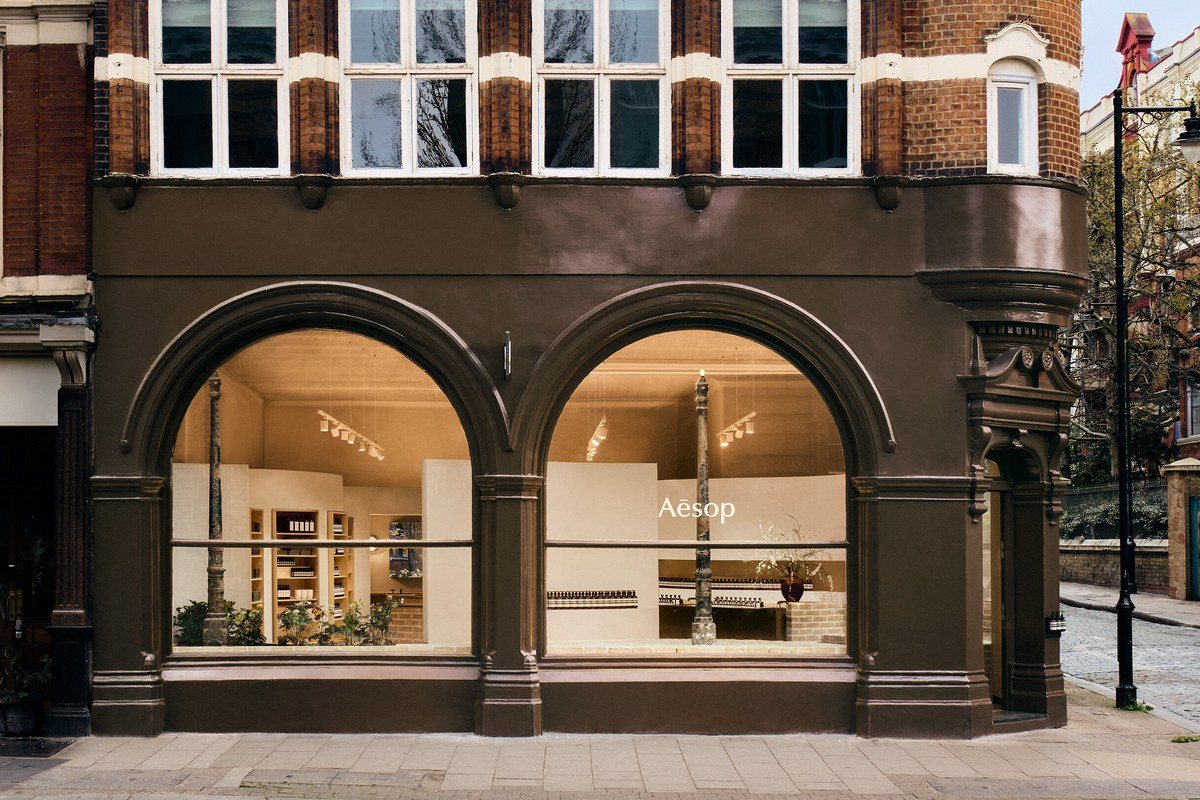
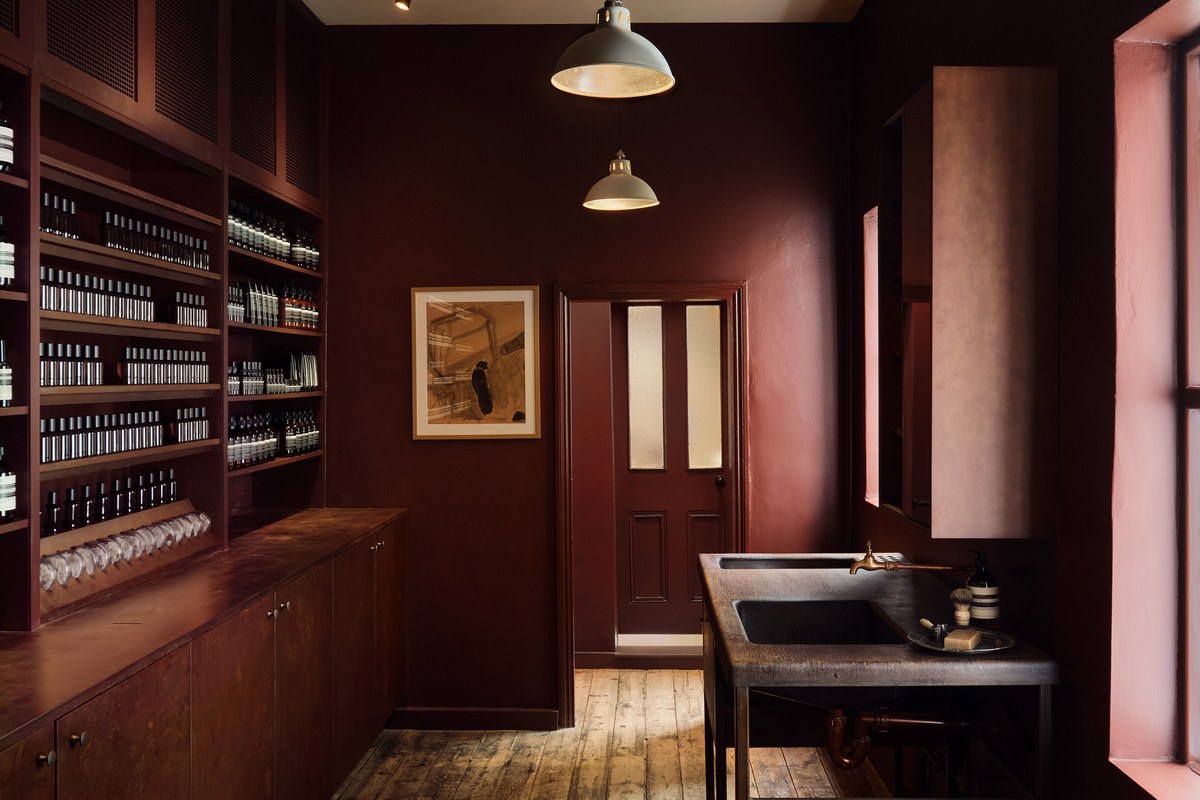
Aesop is a masterclass in luxury as behaviour. It sells skincare at a clear premium, yet its content is almost entirely ritual and detail: the weight of a bottle, the architecture of a store, the quiet choreography of washing your hands. It rarely, if ever, discounts. Every store is designed as its own considered space rather than a rollout of the same template. There is no sale-led urgency, no trend-chasing and no beige quote graphics. The restraint is the marketing. You could remove the name from most of its posts and still know exactly who it is, which is the surest sign of a brand with a world rather than a feed.
Estelle Manor
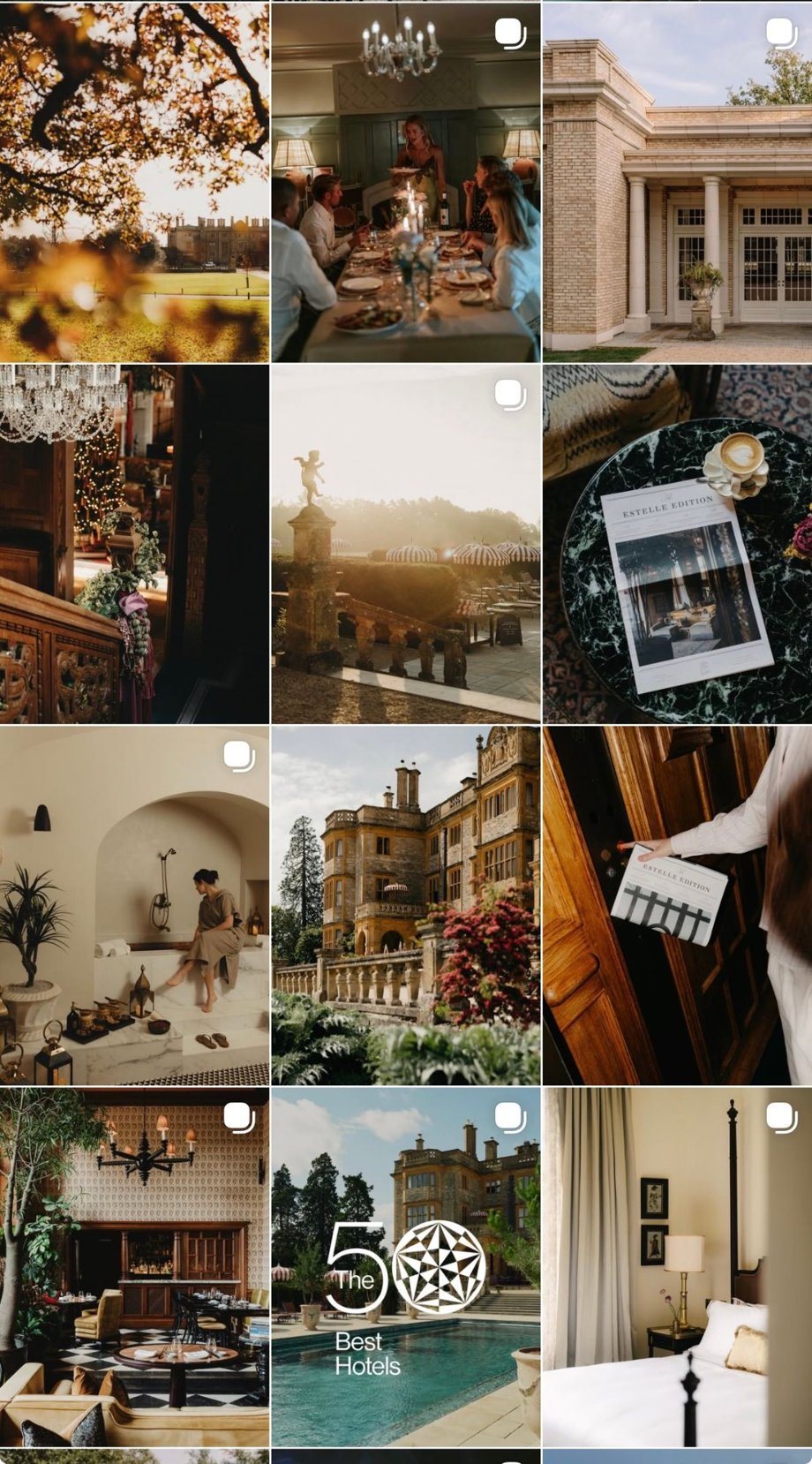
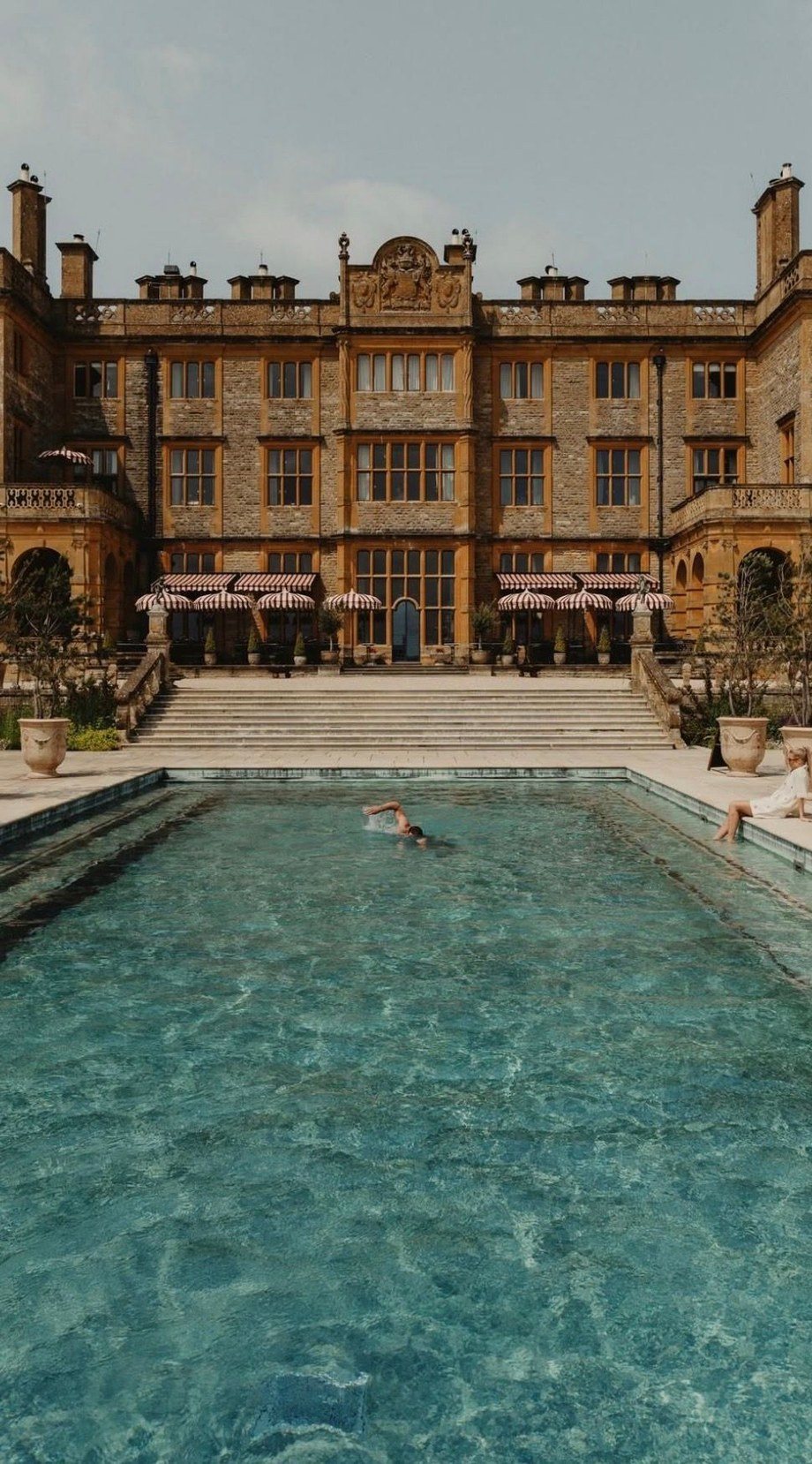
Estelle Manor, the Oxfordshire country house hotel and members’ club, sells a feeling rather than a room rate. Its presence is built on atmosphere, discretion and a consistent sense of place, the light, the interiors, the mood of a weekend there, rather than on availability or offers. It behaves like somewhere you are fortunate to be invited into, not somewhere competing for your booking. For any hospitality brand it is a quiet lesson in why brand worlds matter more than logos: the atmosphere, held consistently, does the selling long before a price is ever mentioned.
Daylesford
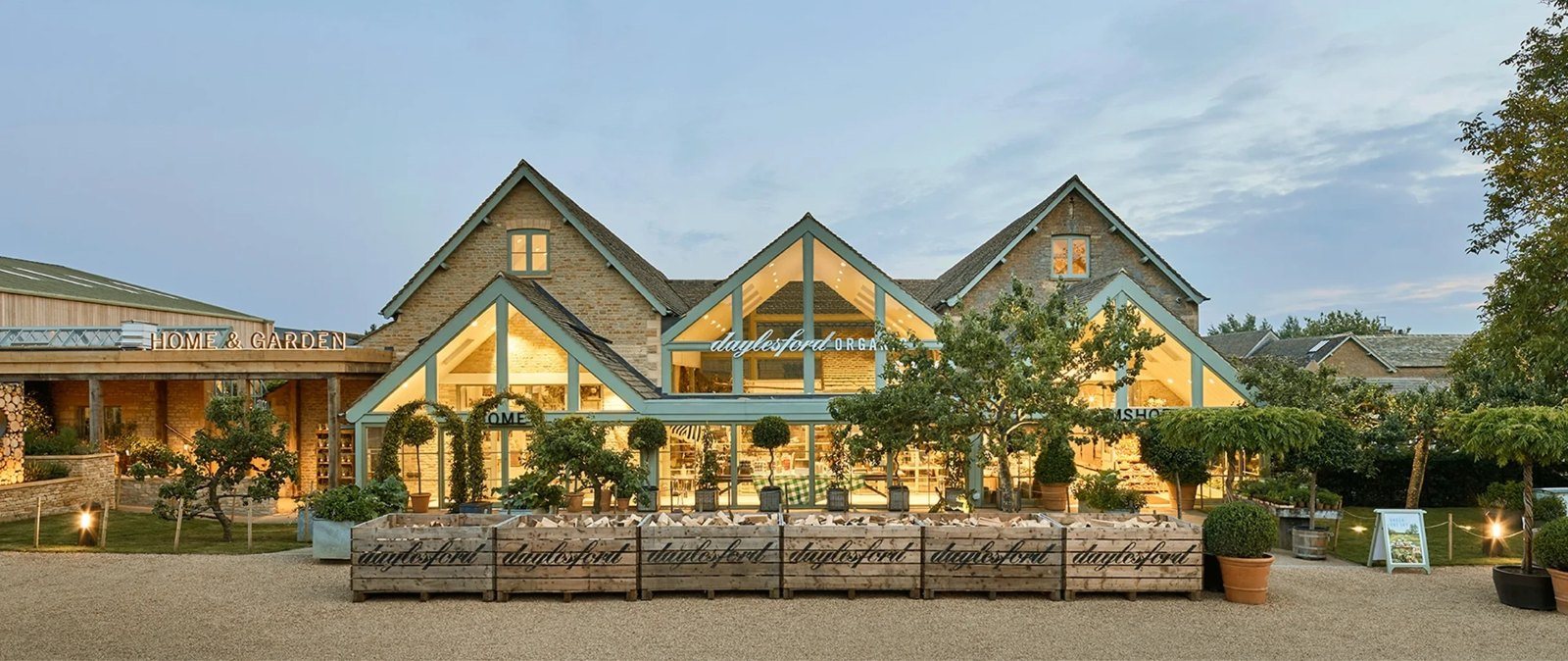
Daylesford, the organic farm and lifestyle brand in the Cotswolds, holds one coherent world across food, farm shop, cookery school and wellness. The palette, the photography, the pace of its content and the language all feel like one considered thing, whether the subject is a vegetable or a spa treatment. Nothing feels discounted, rushed or borrowed from a trend. It is quietly, consistently itself, and that consistency is precisely what lets it command its prices without ever needing to justify them loudly.

Three very different brands, one shared discipline. None of them tells you they are luxury. They simply behave as though it were obvious, and let you arrive at the conclusion yourself.
Why acting mass-market quietly costs a ‘luxury’ brand
The danger of claiming luxury and behaving otherwise is not that it looks a little silly. It is that it costs money, slowly and almost invisibly.
- It erodes perceived value, so the price begins to feel unjustified
- It invites price resistance, because the audience senses the gap between the claim and the behaviour
- It attracts the wrong customer, the one shopping on discount, who leaves the moment someone else is cheaper
- It makes every future campaign work harder, because the brand is forever climbing back up from wherever its content left it
A brand that behaves mass-market trains its audience to treat it that way. Undoing that perception is far more expensive, and far slower, than getting the positioning right in the first place. The British luxury sector, represented by bodies such as Walpole, has long understood that value in this market is built on consistency and restraint rather than reach, and the same logic applies whether a brand is global or just beginning.
How to actually behave like the brand you say you are
Closing the gap is less about spending more and more about deciding what you stand for, then holding the line when it would be easier not to.
- Decide what you stand for - clearly enough that a stranger could feel it within three posts. If it takes a paragraph to explain, it is not yet positioning.
- Build a world - a consistent palette, voice, pace and atmosphere, applied everywhere, right down to how you reply to a comment. It is what makes a brand impossible to confuse with anyone else.
- Post less, and make each one count - one considered piece will always outperform seven forgettable ones, both in how it is received and in what it signals.
- Lead with feeling - let the detail follow, and reserve the information, the specification and the offer for the people who lean in.
- Hold your price - if you need to create access, make a product at a lower price, not a discount on the one that carries the brand.
- Be patient - luxury is the sum of a thousand consistent impressions, and it does not arrive on a schedule. The brands that look effortless have almost always simply held their nerve for longer.
Key takeaways
- Luxury vs mass-market positioning is a behaviour, not a price or a label
- The content is the proof: generic, discount-led, trend-chasing posts expose the gap instantly
- At the top, restraint, consistency, emotion and held prices replace volume and urgency
- Understated brands like Aesop, Estelle Manor and Daylesford sell a world, not an offer
- Behaving mass-market quietly erodes value and draws in the wrong customer
A closing thought
Luxury is not the word on your website. It is the restraint in your content, the consistency of your world and the confidence to say less. The brands that understand luxury vs mass-market positioning do not tell you they are luxury. They behave as though it were obvious, and trust you to notice.
If your brand says one thing and your feed says another, the feed wins every time. The good news is that the feed is entirely within your control. If you are building a brand that deserves to be read as luxury, and you want its content to prove it rather than undermine it, that is exactly the brand and creative direction work we do at JUDE™. Tell us about your brand and we will give you an honest view of where it sits today, and where it could.
Luxury vs mass-market positioning, the questions we hear most
What is luxury brand positioning?
Positioning is the place a brand holds in someone’s mind relative to everything else. Luxury positioning competes on desirability, restraint and meaning rather than on price, reach or availability. It is proven through behaviour, how a brand looks, speaks and acts, far more than through the word luxury itself.
What is the difference between luxury and mass-market positioning?
Mass-market positioning competes on access: more reach, more range, more offers and a lower price. Luxury positioning competes on the opposite: fewer and better, held prices, a consistent brand world and emotion over information. A higher price alone does not make a brand luxury.
Can a brand reposition itself as luxury?
Yes, but not by adding the word luxury or simply raising prices. It means changing behaviour: building a consistent world, holding prices, posting less and more considered content, and leading with feeling. It is a gradual, disciplined shift rather than a relaunch.
Does discounting damage a luxury brand?
Usually, yes. Frequent discounting signals that the original price was never real, and it trains the audience to wait for the sale. Luxury brands protect perceived value by rarely cutting price, and create access through entry products rather than markdowns.
What makes a social media feed look luxury?
Cohesion. A consistent colour grade, a tight palette and a steady pace make a feed instantly recognisable, so you could cover the logo and still know whose it is. Mixed edits, generic stock and discount-led posts do the opposite, and quietly make a brand feel cheaper than it is.
Is social media bad for luxury brands?
No, but generic social is. Templated graphics, trend-chasing and discount-led captions undermine a premium brand. Social works for luxury when it reflects the same restraint, world and language as every other touchpoint.