Most inns are better in person than they are online. The Red Lion was one of them.
The food was doing its job. The rooms were doing theirs. The light through the windows in the morning was doing more than either. What was not keeping up was the picture of all of it, the version a guest meets first, on a phone, weeks before they ever push open the door. That gap, between how a place feels and how it photographs, is where a great deal of independent hospitality quietly loses bookings it has already earned.
JUDE™ was brought in for creative direction and photography. The brief was easy to say and hard to do: make the pictures feel like the place. Not brighter than it is, not busier than it is, not staged into something a guest would arrive to and feel faintly misled by. Just true, and considered, and unmistakably this inn rather than any other.
This piece walks through how we approached the shoot, decision by decision, and why each one was made the way it was. It is written for the person on the other side of the same problem: an owner or operator who knows the place is good, and suspects the photography is holding it back.
The Brief: Make the Pictures Feel Like the Place
Before a single frame was taken, we agreed on one governing rule. Every image had to be something a guest could actually walk into. No prop food that never reaches a table. No rooms staged with borrowed flowers and lifestyle clutter that vanishes the moment a real booking arrives. No filters that turn a warm, low-lit dining room into a bright, flat showroom.
This sounds obvious. It is also the single most common failure in hospitality photography. The temptation, especially for an independent business investing real money in a shoot, is to make everything look like more than it is. The result is images that over-promise, and a guest who arrives already slightly disappointed, comparing the room in front of them to the room in the picture.
Editorial photography does the opposite. It trusts the place. It photographs what is genuinely there, at its best but still recognisably itself, and it leaves room for the guest to feel rather than be told. For a coaching inn, where the whole proposition is warmth, craft and a certain unhurried confidence, that restraint is not a stylistic preference. It is the strategy.
Planning the Day Around the Light
A hospitality shoot that holds together is not improvised. It is planned around the one resource that cannot be bought, rushed or faked: natural light. Everything else follows from it.
We built the running order around the sun rather than the diary. The quiet morning scenes came first, while the light was soft and low and moving across the tables. Food came through the middle of the day, when the kitchen could plate to order and the dining room held its steadiest light. The warmer, more atmospheric room details came later, as the light dropped and the lamps started to earn their place.
This matters more than any camera decision. A room photographed in hard midday light looks like an estate agent's listing. The same room, photographed as the light rakes low across it, looks like somewhere you would want to wake up. The photograph did not change. The hour did.
- We shot to the window, never against it. Daylight was treated as the key light in almost every frame, with the camera placed to let it fall across the subject rather than flare behind it.
- We kept lighting rigs to a minimum. The occasional gentle bounce to lift a shadow, nothing that announced itself. A dining room lit like a studio stops looking like a place you can visit.
- We let the room stay a little dark. Shadow is not the enemy of a premium image. It is often the thing that makes it read as premium in the first place.
The reward for planning around light is that the atmosphere arrives on its own. You are not manufacturing a mood in post-production. You are catching one that was already in the building.
The Character of the Place
Before the food and the rooms, we photographed what makes the inn feel like itself. Every good coaching inn has a handful of details that do a disproportionate amount of work: the things a guest half-notices on the way through and reads, without quite realising it, as evidence that the place is genuine.
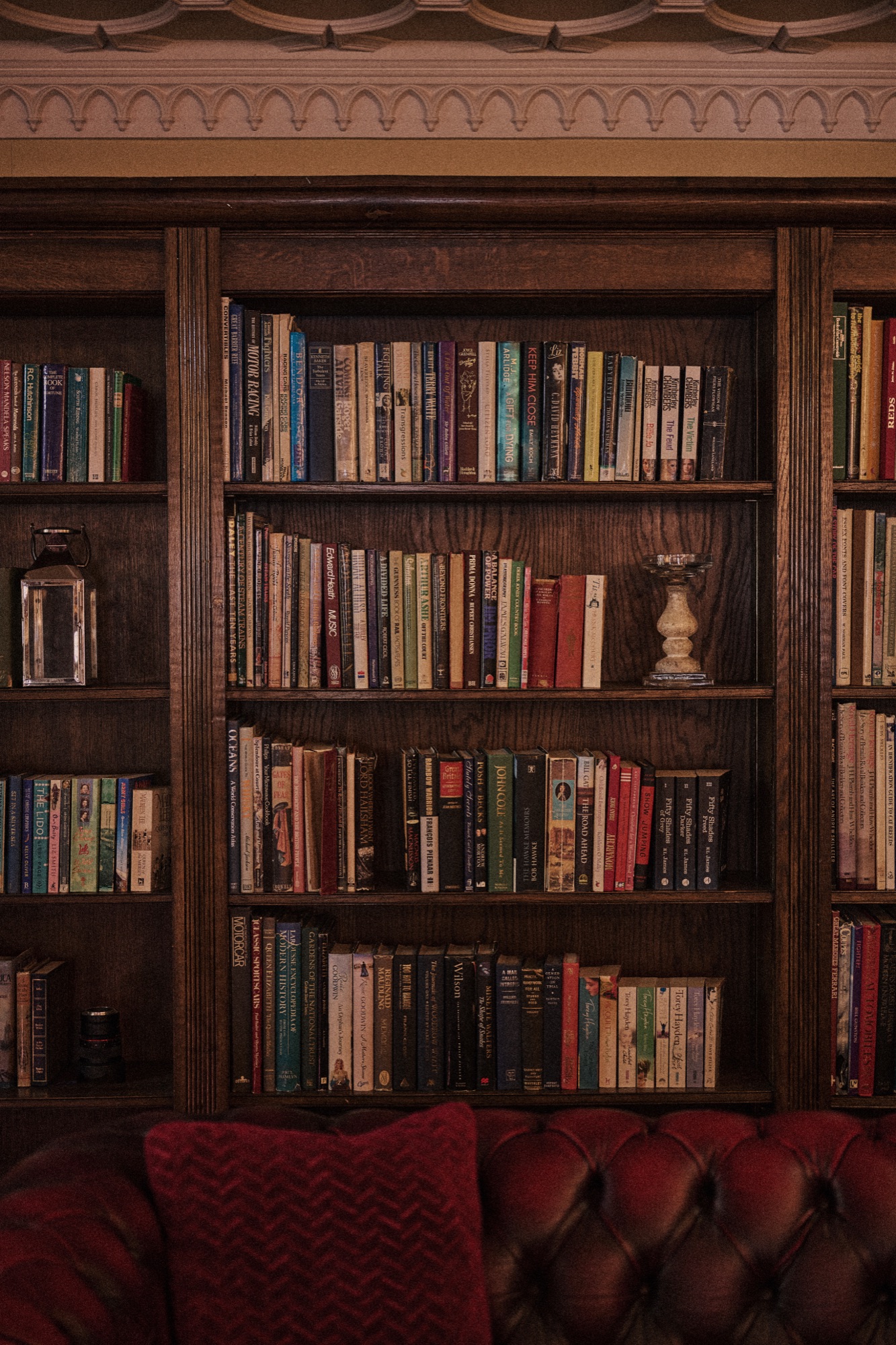
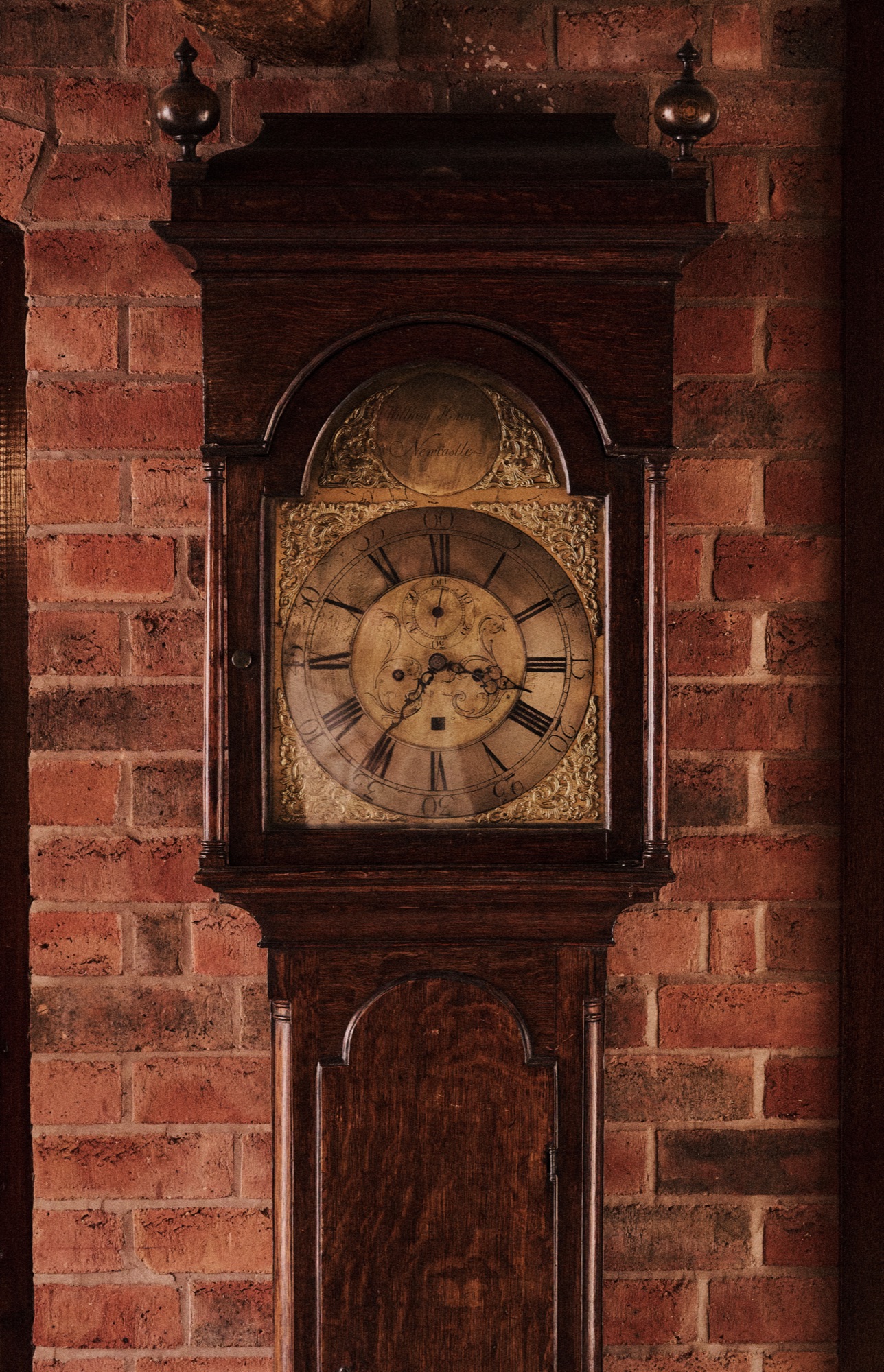
These are the images that quietly place a brand in time. A well-shot detail of a worn, real object says more about heritage than any amount of copy claiming it, and it costs a guest nothing to believe. We treated them as seriously as the food, because for a certain kind of guest they are the deciding vote.
The Plate Is the First Room
For a coaching inn, food is the hook. It is the thing people drive out for, book a table around and photograph themselves without being asked. So the food had to be photographed the way it is actually served, not dressed up into an advertisement for a dish that could never leave the kitchen.
We worked directly with the kitchen, plating to order and shooting fast, before anything wilted, cooled or lost its gloss. There was no stylist reaching for cotton wool or motor oil. The pasta was the pasta. The salmon was dinner. When a dish is genuinely good, the job of the photograph is to get out of its way.
Every plate was shot in the light it is eaten in. No gels, no gloss, no glycerine standing in for steam. When food photography tries too hard, a guest can feel the effort, and effort reads as doubt. Restraint reads as confidence, and confidence is what sells the second plate.
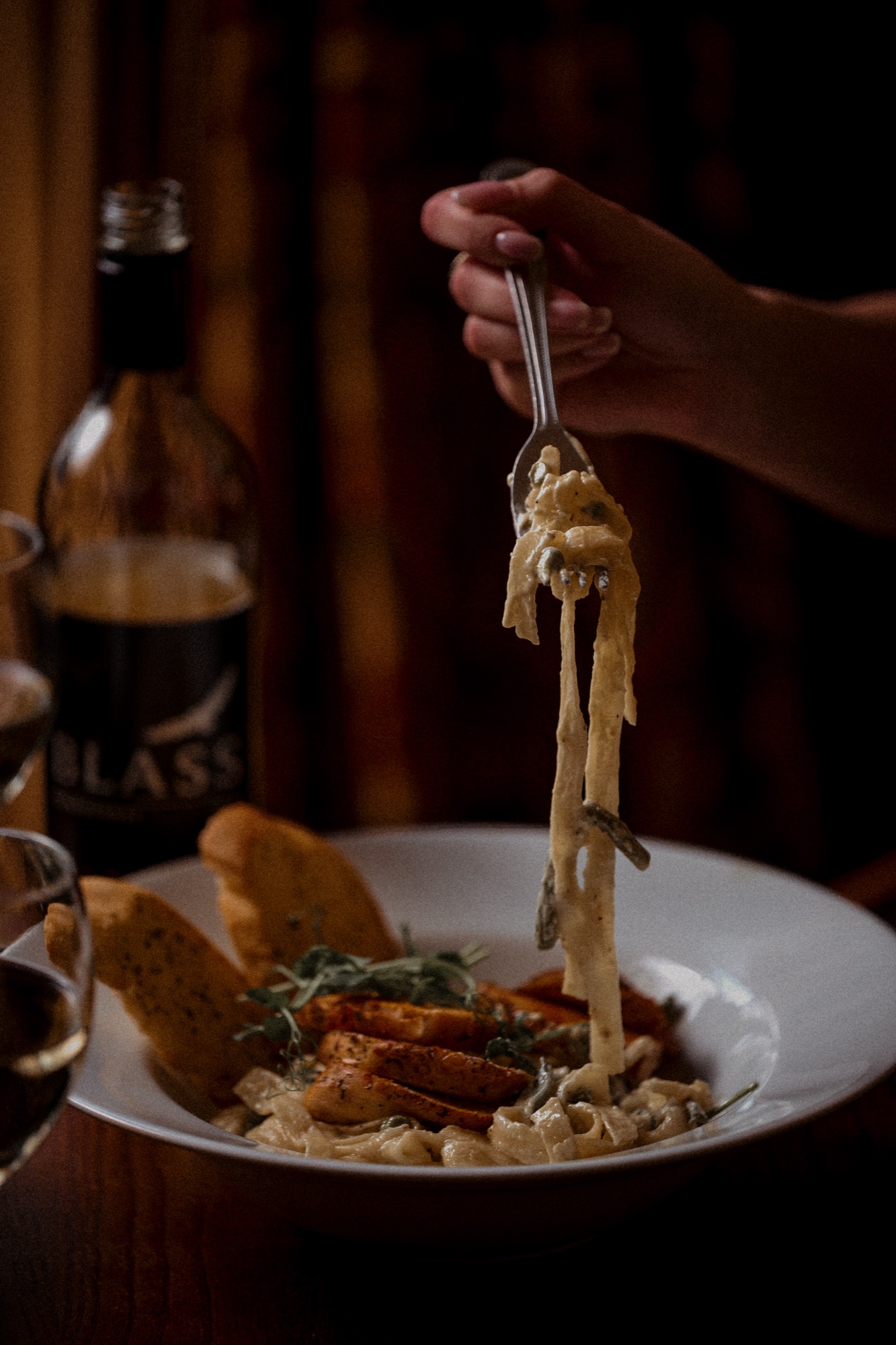
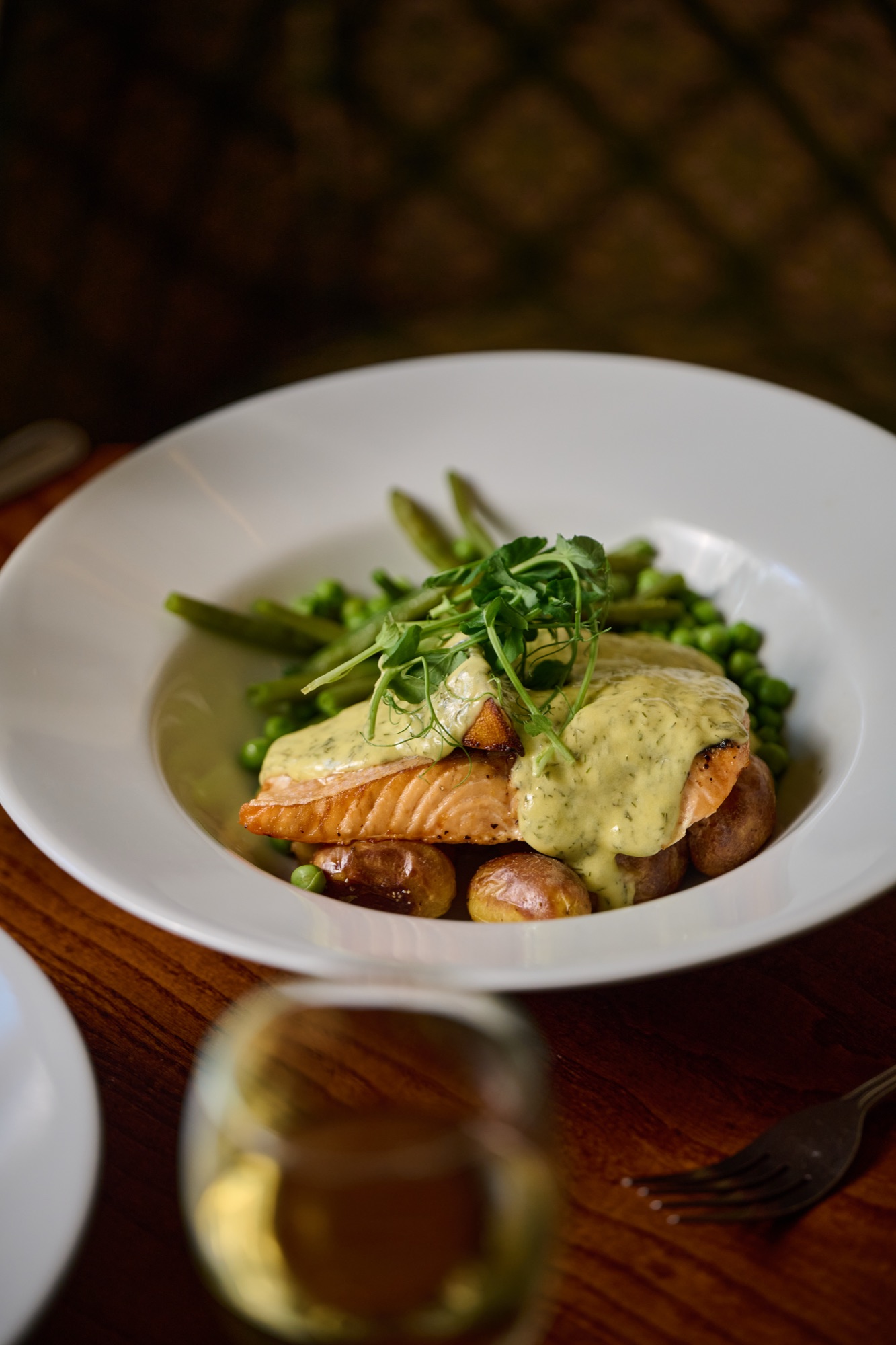
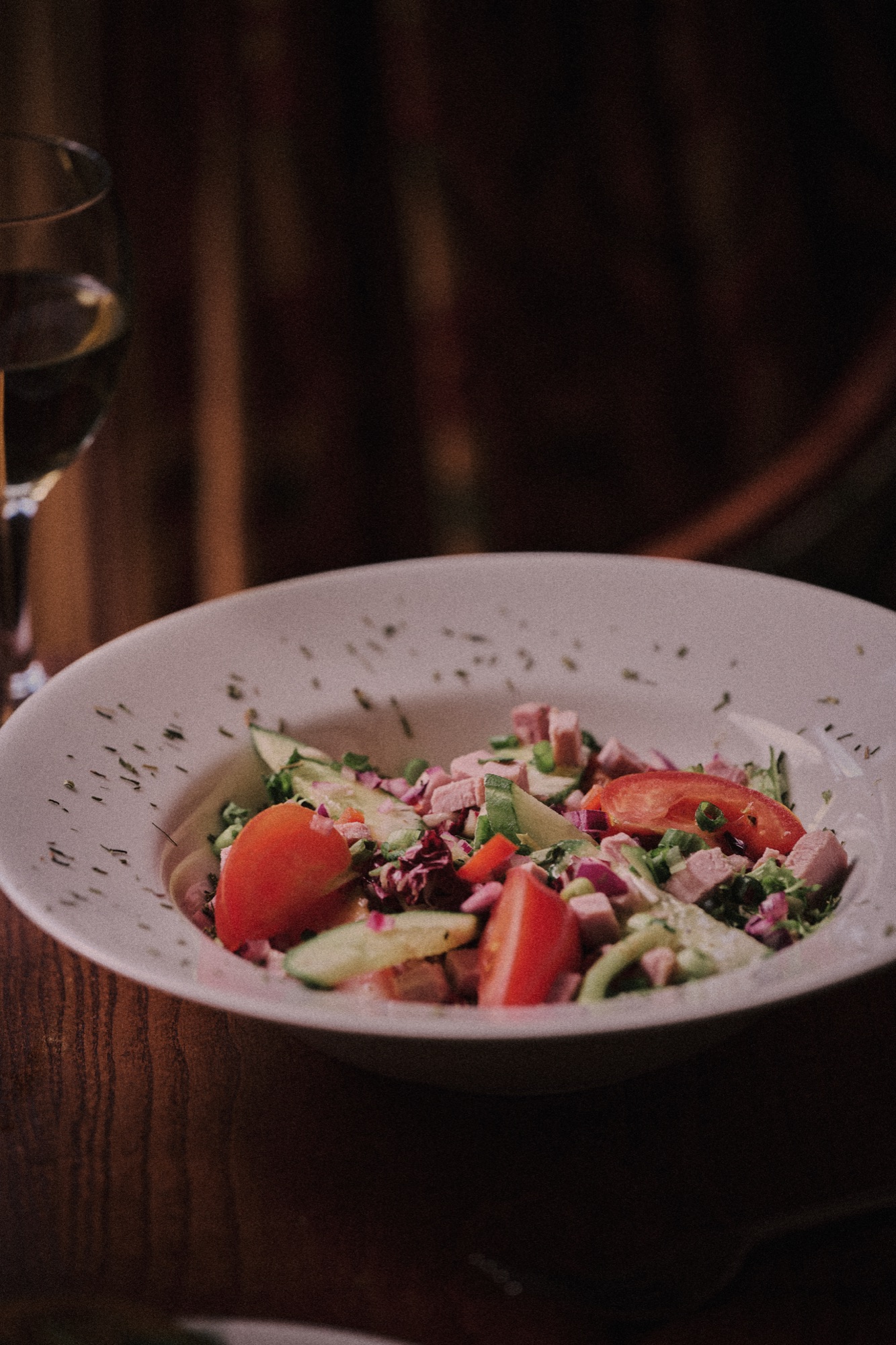
The point of a food image is not to make someone hungry in the abstract. It is to make a specific person, scrolling in the specific gap between lunch and deciding where to book, feel that this is the plate they want in front of them on Friday. Honest light and a real plate do that. Theatre does not.
There is a commercial logic underneath the aesthetic one. A guest who books on the strength of an over-styled photograph and receives something lesser writes a particular kind of review, the one that mentions the gap between the picture and the plate. A guest who books on an honest photograph and receives exactly that, served with care, writes the other kind. The photograph is quietly setting the review months before the meal is cooked.
Photograph the Evening, Not Just the Dish
Guests do not book a plate. They book an evening. So alongside the food, we photographed the setting the food lives inside: the laid table, the glassware catching the last of the daylight, the linen, the warmth of the room around the plate.
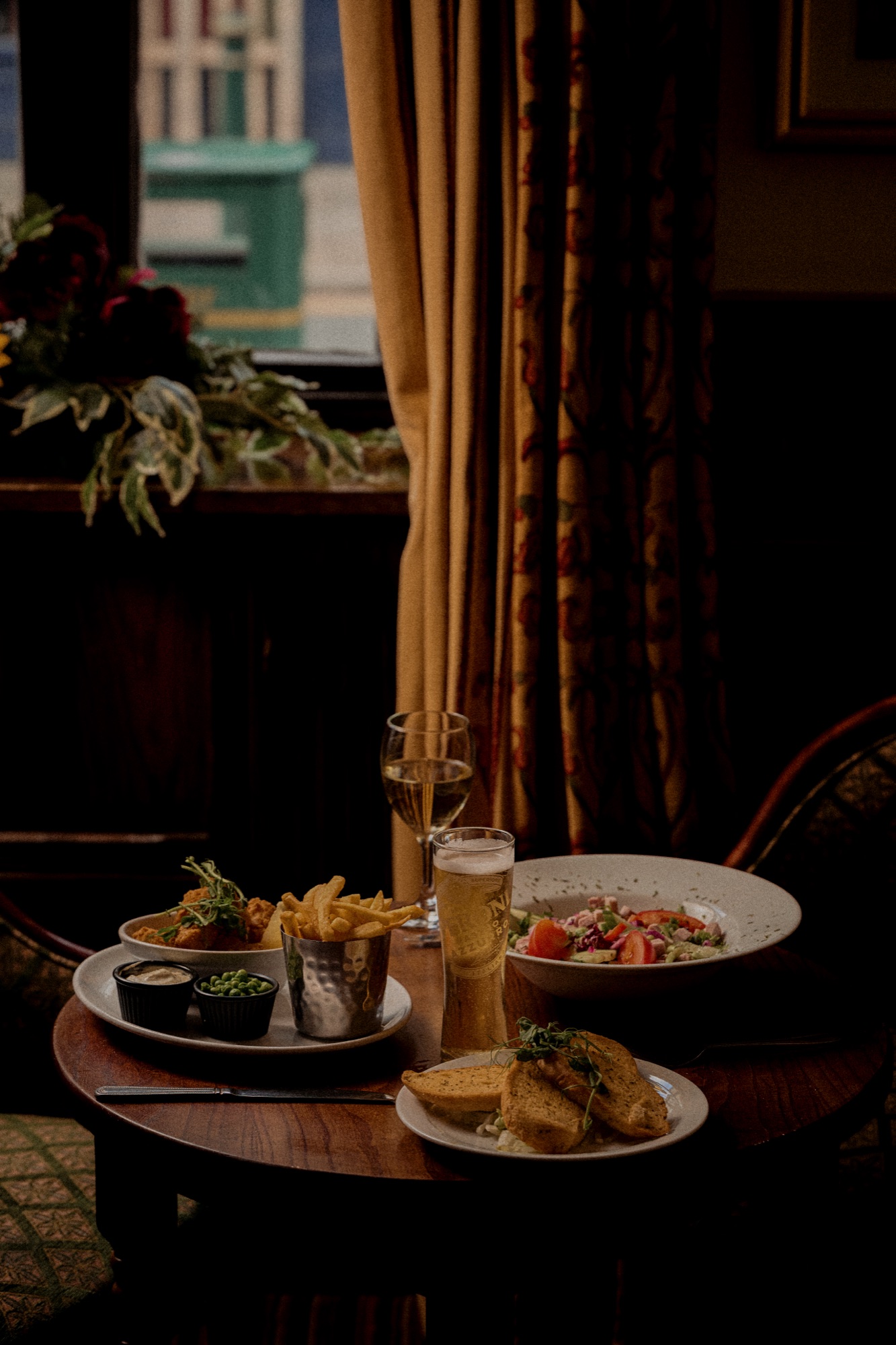
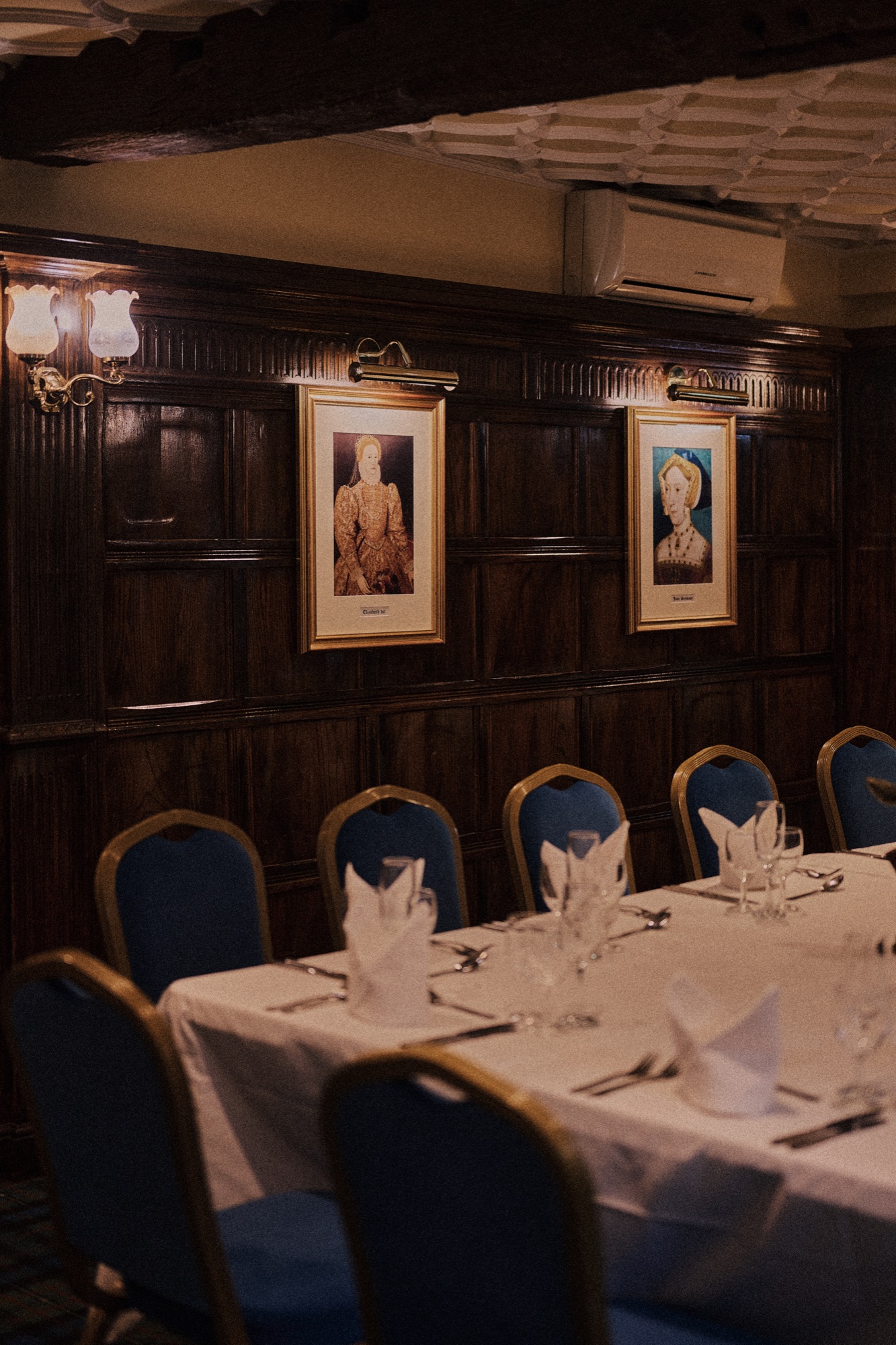
This is the difference between a menu photograph and a hospitality photograph. One shows you what you will eat. The other shows you who you will be for a couple of hours: unhurried, looked after, somewhere that has thought about the details so you do not have to. That feeling is the product. The dish is only part of it.
It is also the part most independent operators under-shoot. They photograph the food carefully and forget the room it is eaten in, then wonder why the gallery feels like a menu rather than an invitation. A single considered image of a laid table, shot with the same care as the food, does more for a Friday-night booking than another close crop of a plate.
The Bar Keeps Its Own Hours
A coaching inn lives by its bar as much as its kitchen. It is where the room is warmest and the light is lowest, and it rewards a different kind of photograph: less composed, more caught. So we slowed down and shot it the way it actually runs, a drink poured, a pint settling, a hand around a glass.
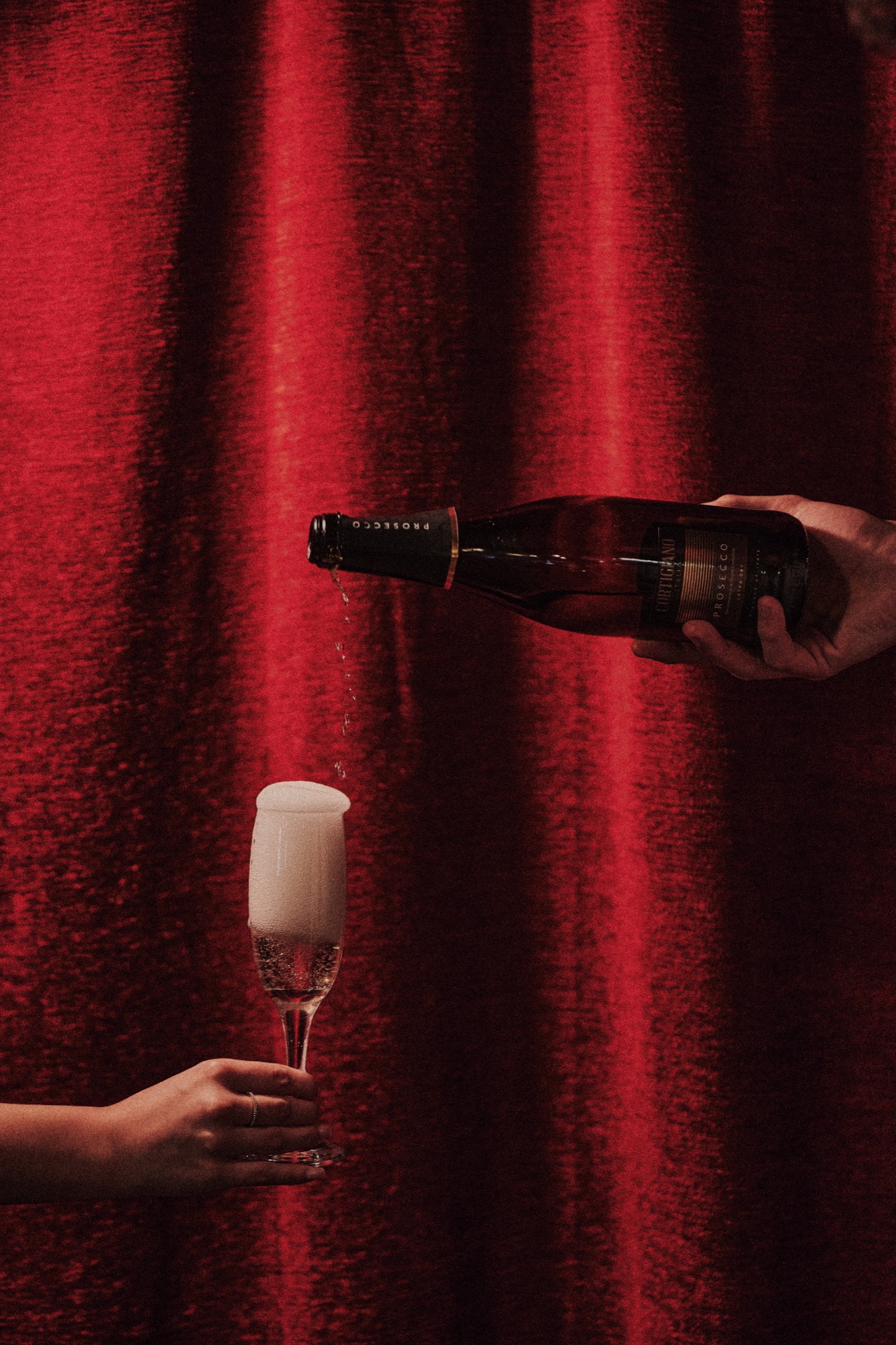
The pints matter too, and they are easy to get wrong. Photograph a beer like a product and it looks like an advert. Photograph it in the hand, in the low light of the room, and it looks like the end of a good day.
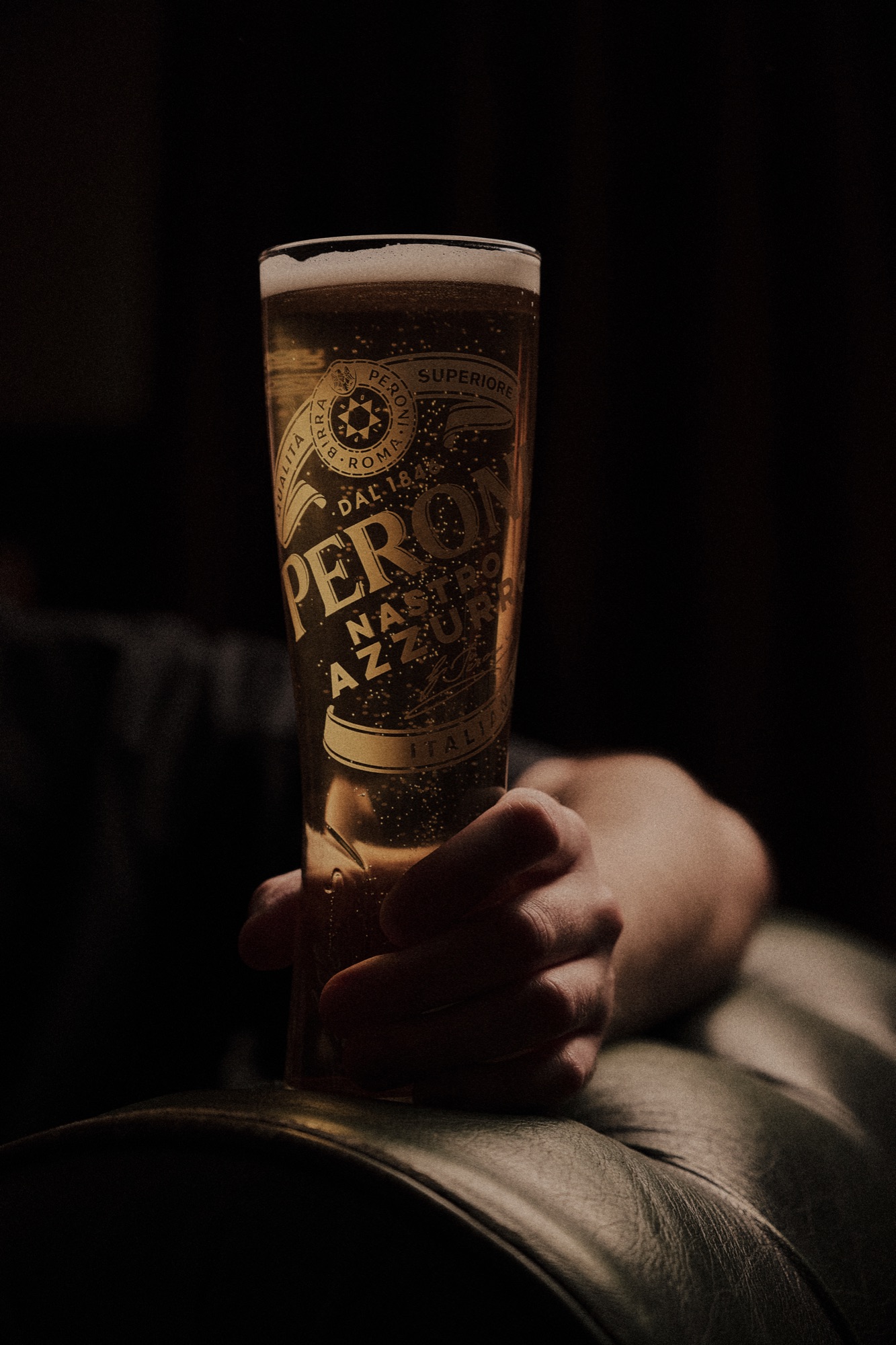
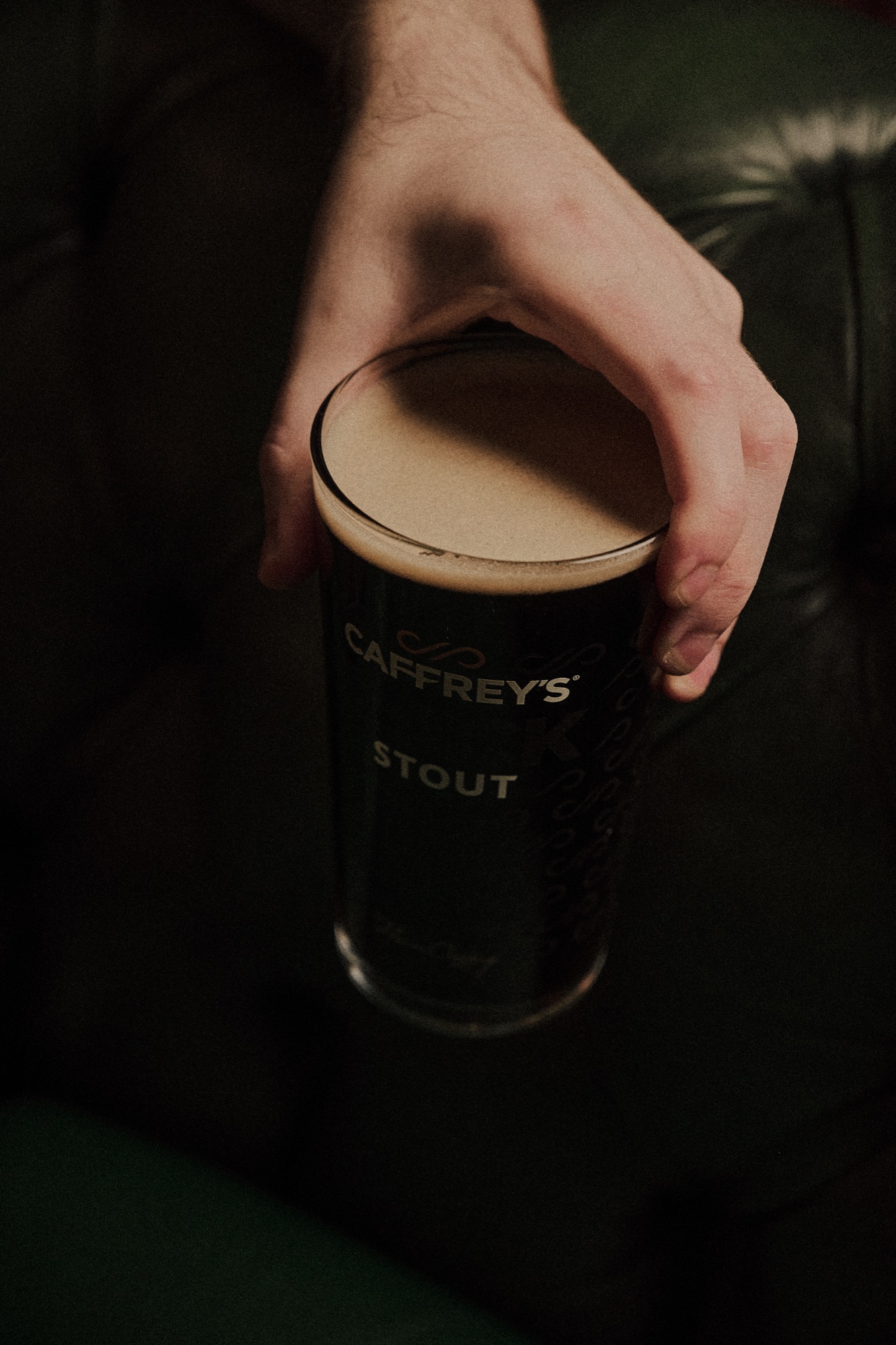
These are the frames that make a place feel lived-in rather than staged. A guest can picture the evening they will actually have, which is a more persuasive thing to sell than a tidy, empty interior.
The Morning Sells the Stay
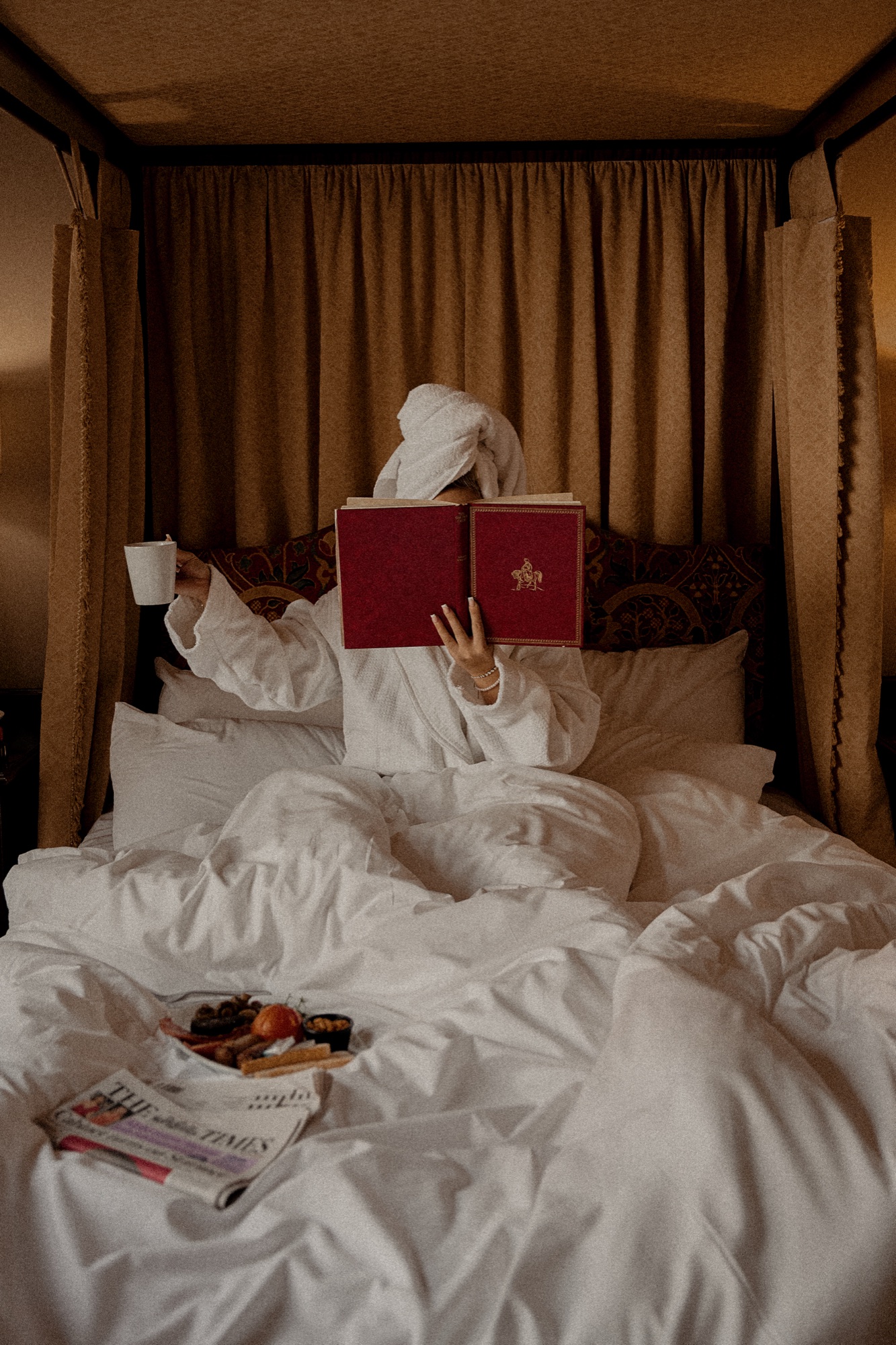
A coaching inn is not only a restaurant with rooms above it. It is a place to wake up. And the images that sell a stay are rarely the grand ones. They are the small, familiar rituals a guest recognises before they have consciously decided anything: coffee by the window, the papers on the table, the slow start that a good inn protects.
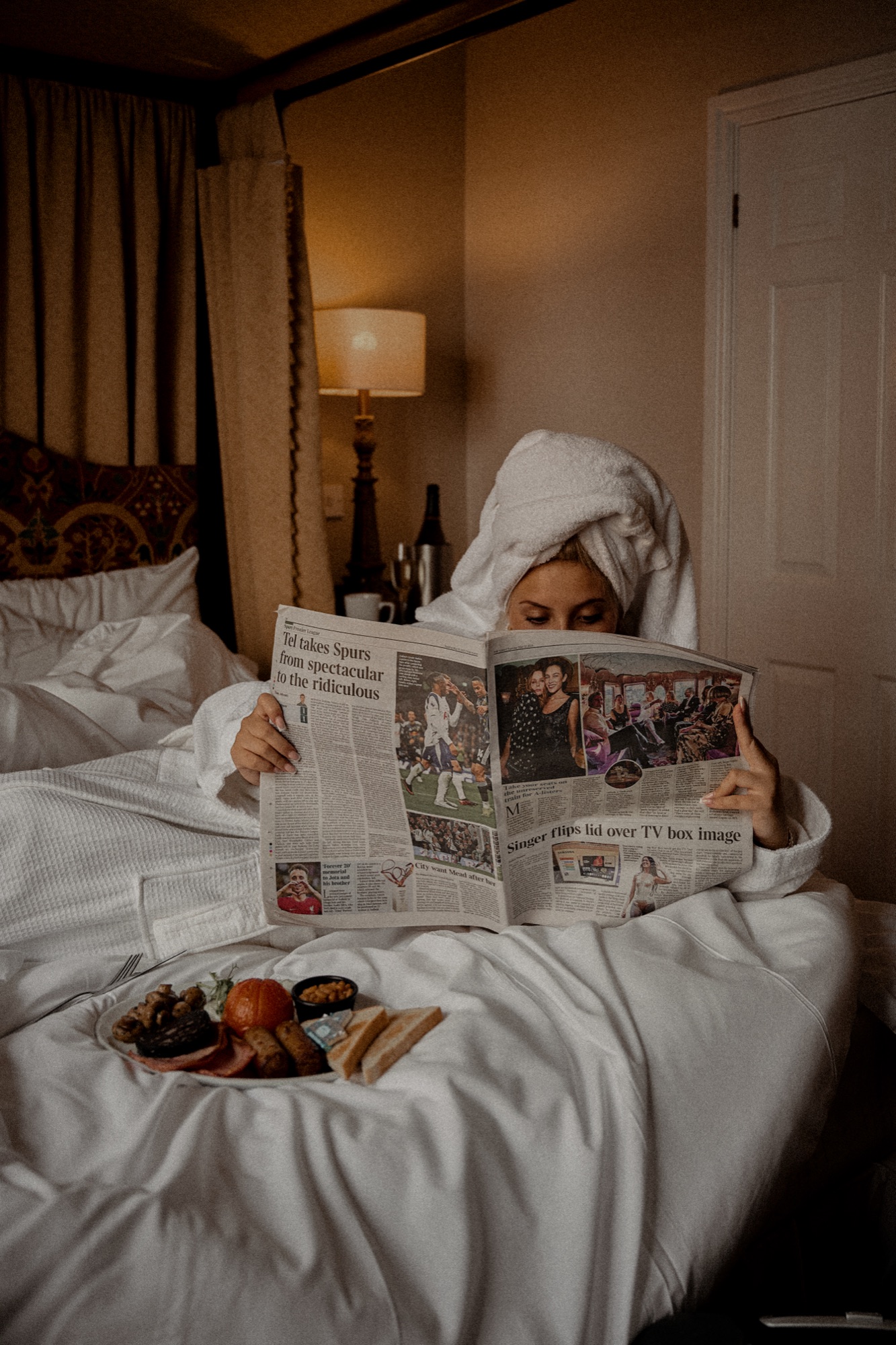
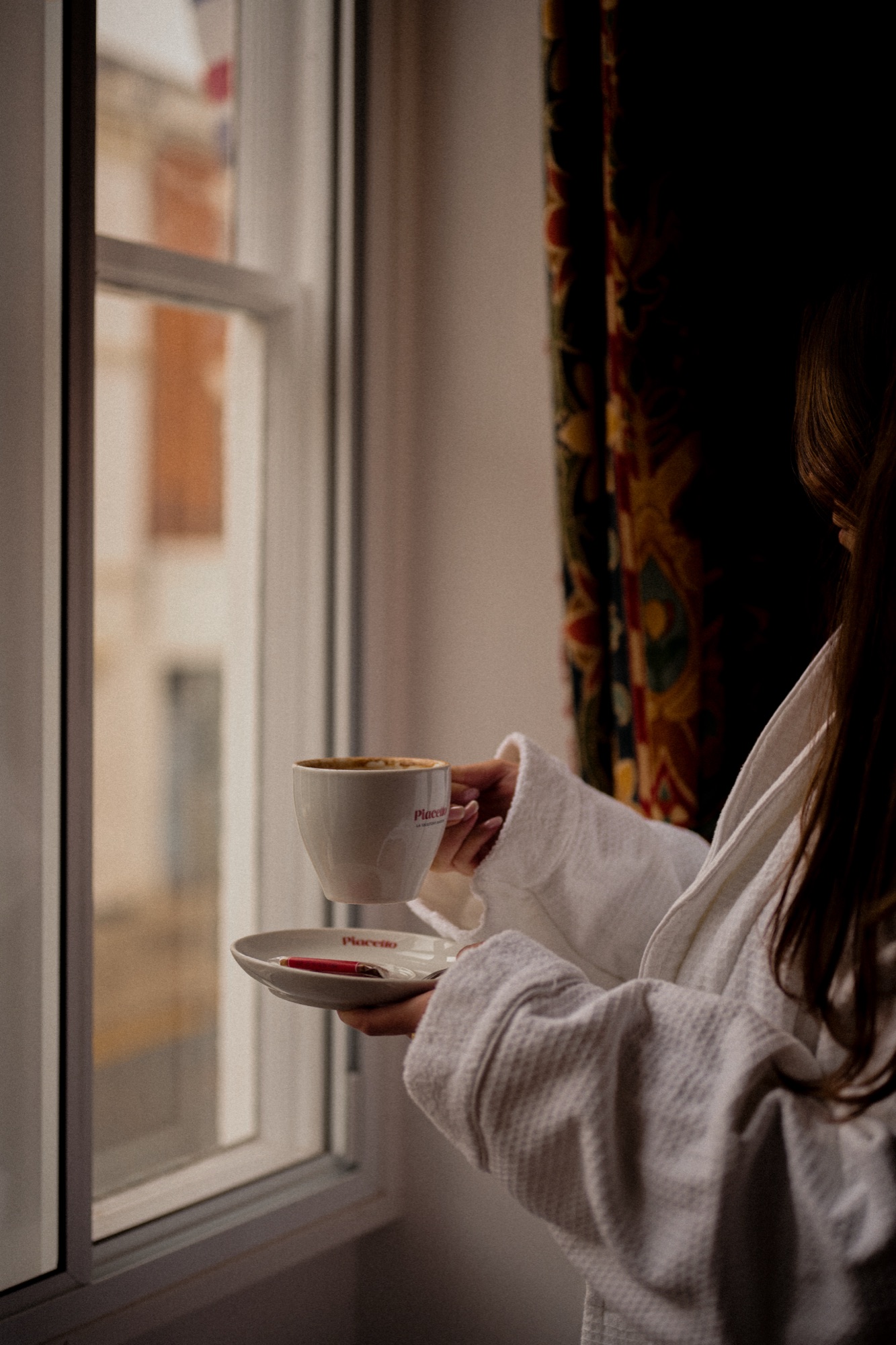
We shot these first, at the top of the day, and let the tone they set carry through the rest of the shoot. Light is the cheapest and most persuasive tool in any hospitality shoot, and it is only available for a few hours in the shape you want it. Chase the light, and the atmosphere arrives on its own. Fight it, and no amount of retouching brings it back.
There is a psychological reason these quiet images convert. A prospective guest is not really buying a room. They are buying a version of themselves on a slow morning, unhurried and looked after, a version that is hard to reach in ordinary life. Photograph the ritual, and you let them picture the feeling. Photograph only the fixtures, and you leave them comparing thread counts.
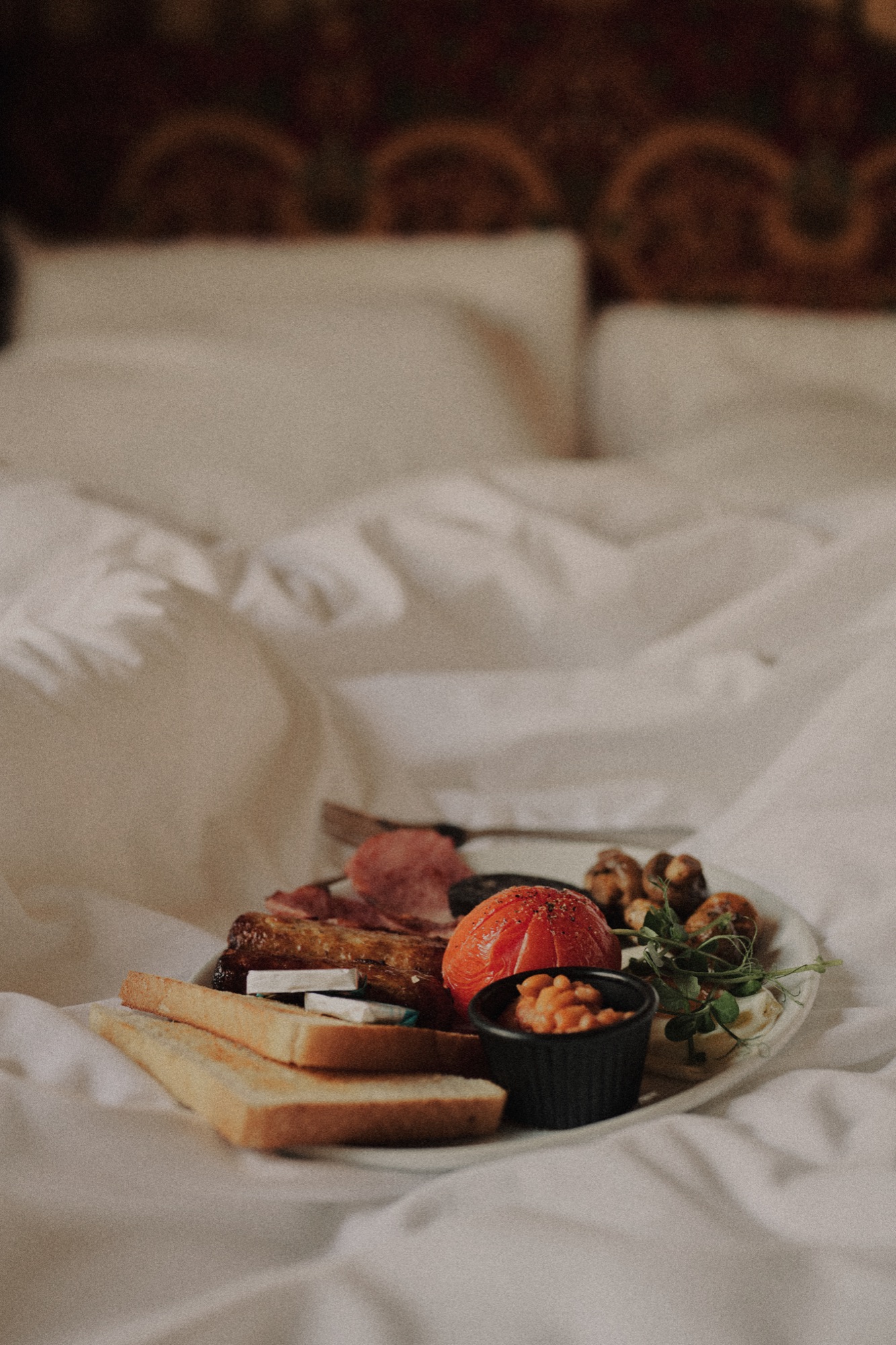
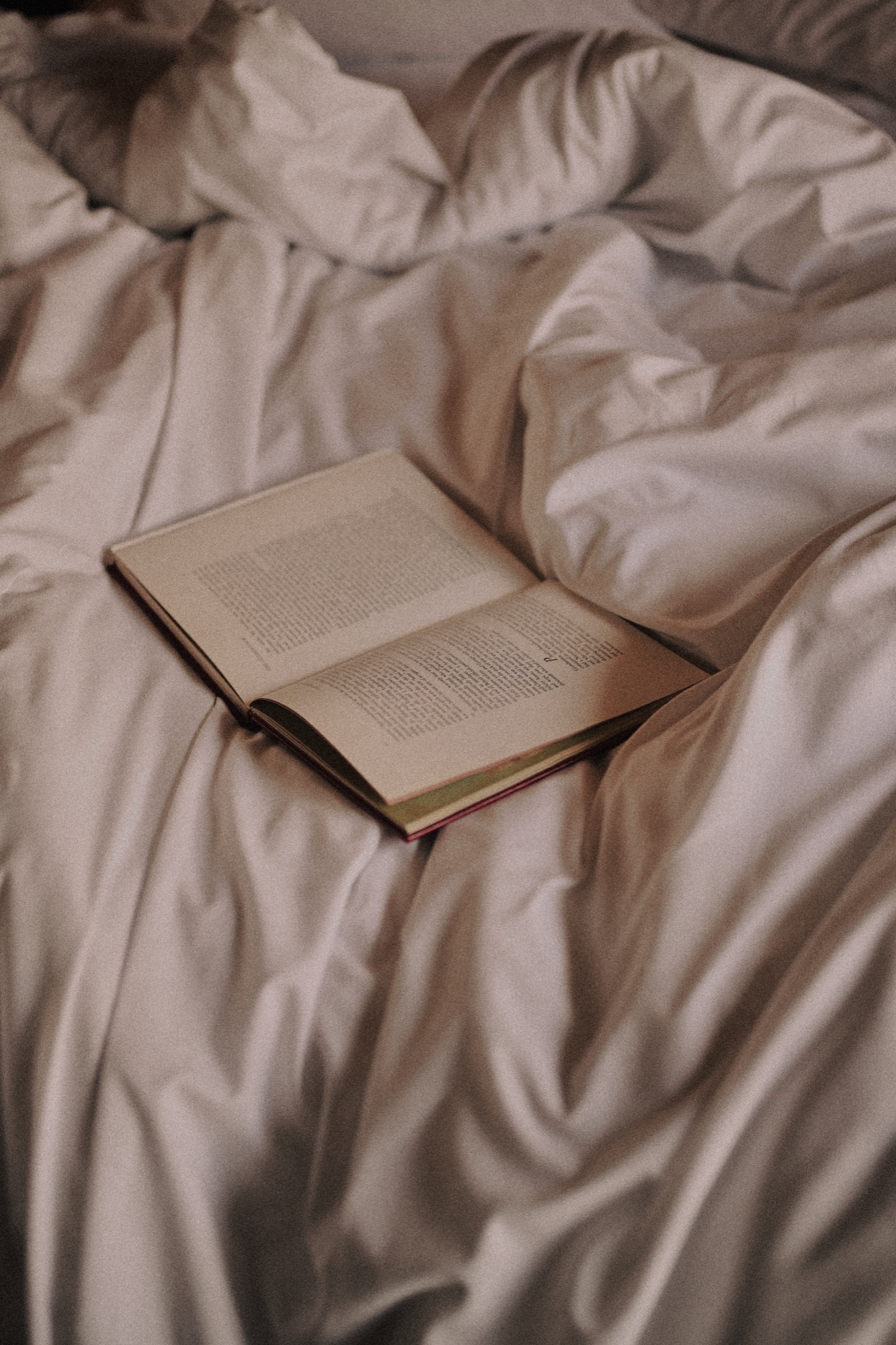
Not every morning happens downstairs. The same unhurried rule carries upstairs, to a breakfast brought to the room and a book left open on the bed, the small proofs that a guest is being looked after rather than processed.
Rooms, Dressed the Way a Guest Finds Them
Bedrooms are where hospitality photography most often overreaches. The temptation is to style the room into something it never is, then watch a guest arrive to the real version and feel the drop. We did the opposite. The rooms were dressed the way they are on arrival, then photographed for calm rather than for coverage.
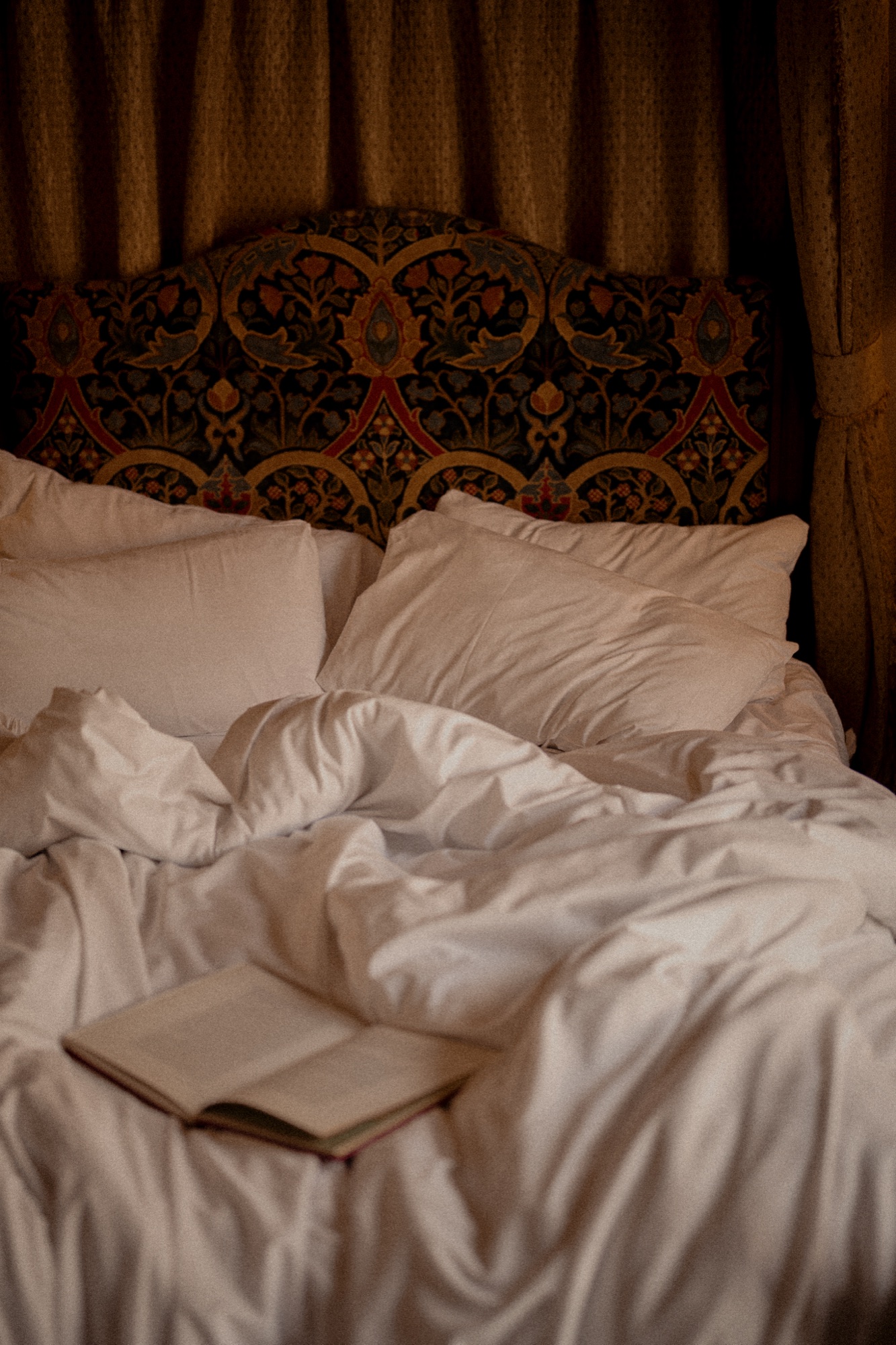
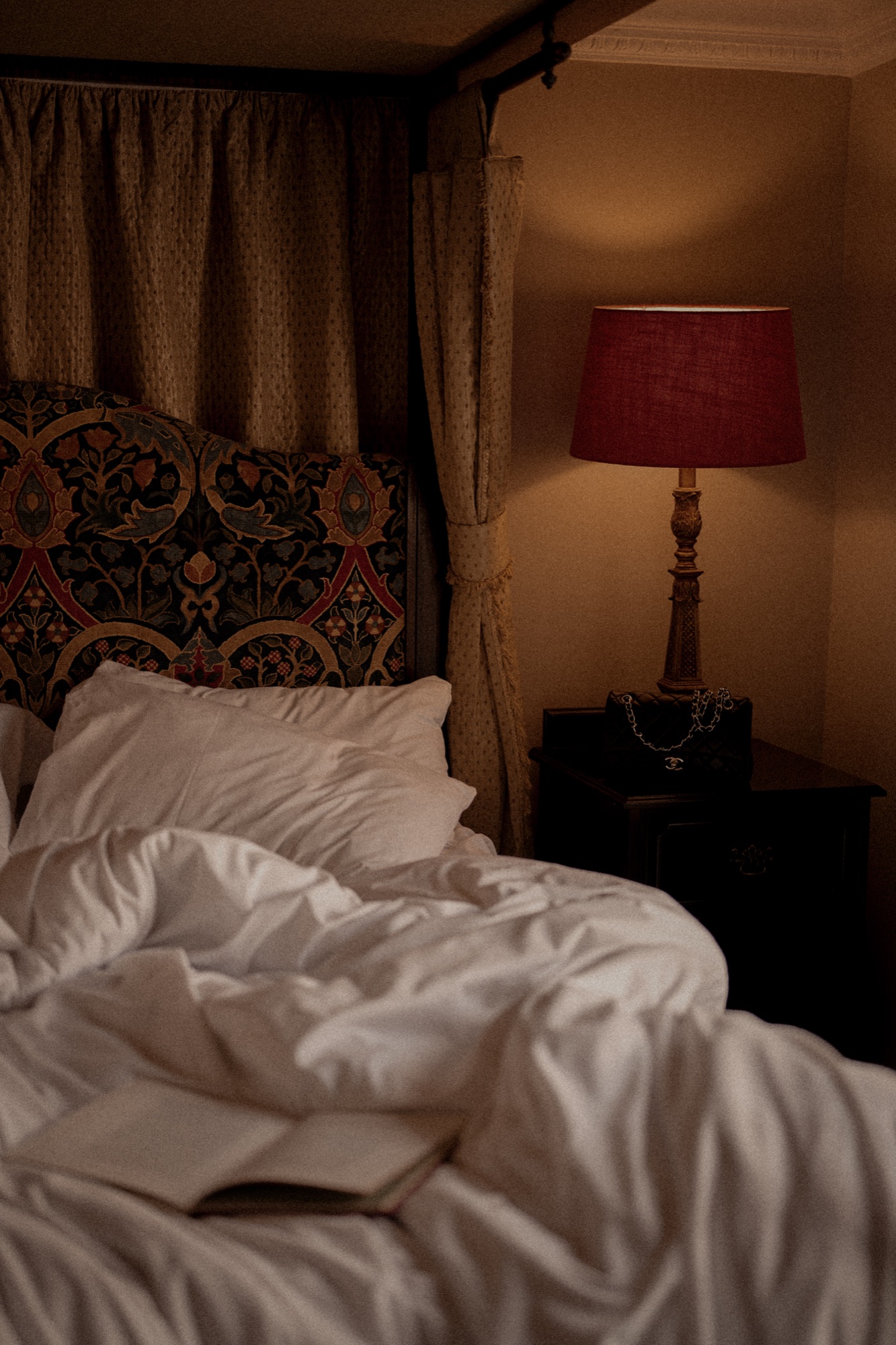
The made bed and the small detail carry the two registers of the same room: how it looks on arrival, and how it feels once the lamps are on. Detail images are what let a guest imagine themselves into a space, and what separate a property that looks considered from one that looks merely clean.
We shot fewer angles than a listing photographer would, and spent longer on each. A room does not need eight photographs. It needs two or three that are genuinely good: one that establishes the space honestly, one that captures the light, and one detail that says someone here pays attention. Coverage reassures the owner. Restraint persuades the guest.
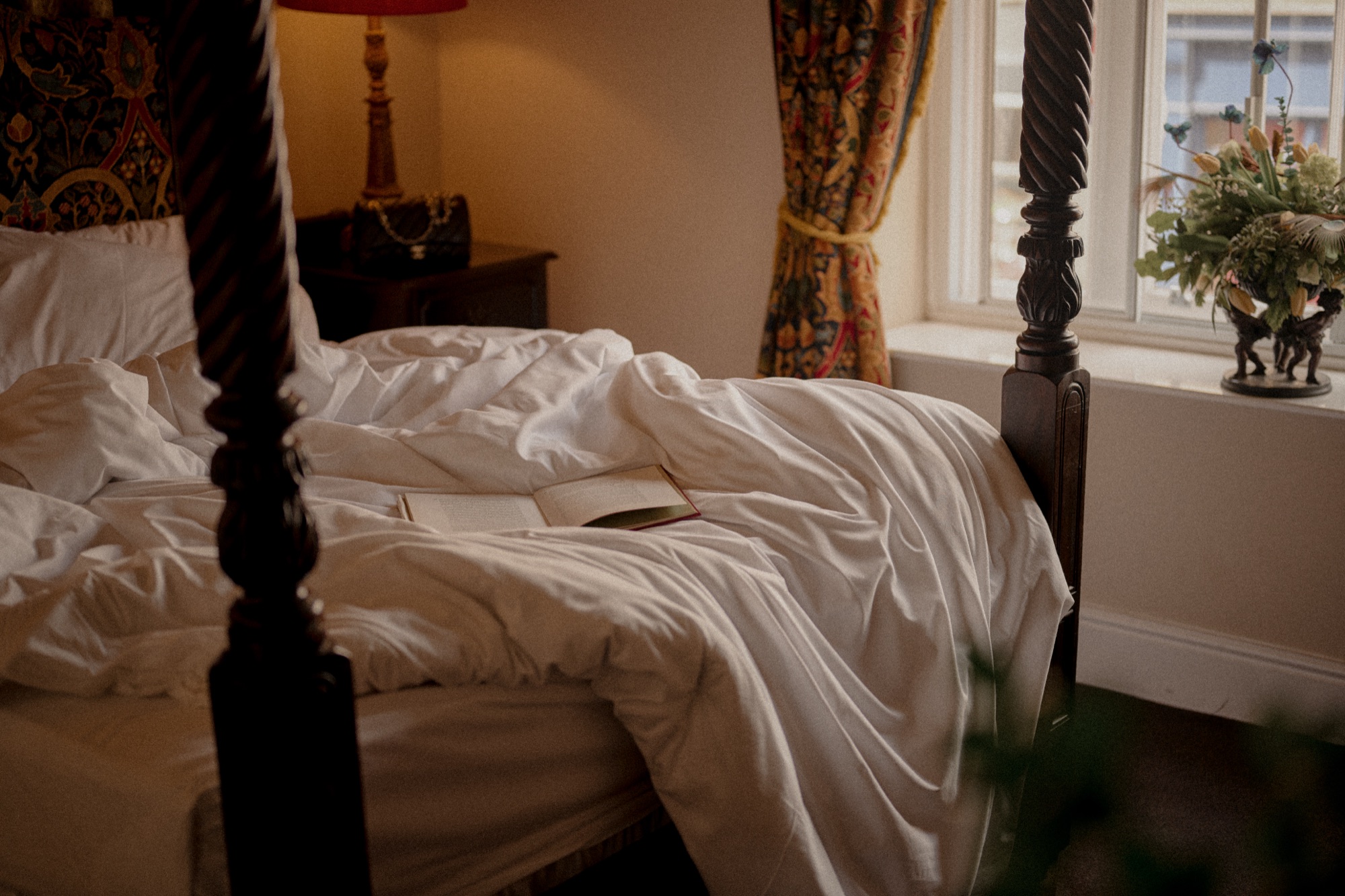
The bed and the window is one of the most persuasive images any place to stay can own, because it does two jobs at once. It shows the guest where they will sleep, and it shows them the light they will wake up to. Both are promises, and both are ones the inn can actually keep.
How We Approached the Shoot
None of this is luck on the day. A hospitality shoot that holds together is planned around a small number of decisions made before the camera comes out.
- Shoot to the light, not the schedule. Morning rituals and rooms first, food through the middle of the day, warmer detail as the light drops. The running order follows the sun, not the diary.
- Real plates, light styling. The kitchen cooks it the way it is served. We adjust, we do not reinvent. A guest should be able to order the photograph.
- One register, held all day. Every frame belongs to the same world, so the set works as a system across the website, social and print, not as a scatter of unrelated pictures.
- Restraint over coverage. A tight edit of images that feel like the place beats a large library of images that could be anywhere.
- Edit ruthlessly. The shoot is not the deliverable, the edit is. A weaker frame left in the set quietly drags the strong ones down to its level.
The result is a set of images that does the same job the inn does: it tells the truth, quietly, and trusts the guest to feel it.
Where These Images Actually Go
A shoot is not a gallery. It is a working set of assets that has to earn its place across every surface a guest touches on the way to a booking. Planning for that from the start is what separates a photoshoot from an expense.
The same Red Lion set was built to carry the brand across four fronts at once:
- The website. The hero, the rooms pages, the dining pages and the booking journey, all drawn from one coherent library, so the site feels like one place rather than a collage.
- Social. A steady supply of in-world images that look like the property, not like stock, so the feed reinforces the brand instead of diluting it.
- Listings and third-party channels. Strong, ownable imagery that lets the inn stand out even inside the flattening template of an online travel agent.
- Print and in-house. Menus, welcome cards, local press and seasonal campaigns, all pulling from the same visual language.
Because every image shares one register, the brand holds together wherever it appears. That consistency is not a nicety. It is what makes a small independent feel established, and an established feeling is what lets a property hold its rate.
The Commercial Case for Considered Photography
It is tempting to file photography under branding and move on. In hospitality, that is a commercial mistake. The image is the first thing a guest experiences and, increasingly, the deciding one. Google's own research into how travellers choose keeps landing on the same point: people commit to the places they can already picture themselves inside. You can read the pattern in Think with Google's travel behaviour insights.
Considered photography does three commercial things at once. It narrows the gap between expectation and arrival, which is where reviews are won or lost. It reduces price sensitivity, because a guest who can feel the quality is no longer comparing on rate alone. And it reduces reliance on the booking platforms, because a property that is clearly felt across its own surfaces has less need to borrow their reach.
That last point matters more than it looks. Strong, ownable images are part of how hotels stop quietly funding OTA growth. When a place is clearly felt across its own website and social channels, the direct booking has less to compete with, and more reason to happen. Photography, done properly, is not a line item under marketing. It is infrastructure.
A guest cannot taste the food or feel the room. All they can do is trust the picture. So the picture has to be trustworthy.
Briefing a Photographer for Your Own Property
If you are planning a shoot for your own inn, pub, restaurant or hotel, most of the value is decided before anyone arrives with a camera. A few principles carry almost every hospitality shoot:
- Start from the booking, not the gallery. Decide what a guest most needs to see to feel confident, then shoot that first. Everything else is a bonus.
- Protect the light. Book the shoot around the hours your rooms and dining spaces look their best, and hold those hours even when the day runs behind.
- Shoot the real thing. Use plates from the actual menu, rooms as they are turned down for a guest, and people who genuinely work there. Authenticity photographs differently to arrangement.
- Brief for a register, not a shot list. Agree the feeling first, quiet, warm, considered, and let the shot list serve it. A list of angles with no agreed mood produces a set with no through-line.
- Plan the whole year in one day. A well-run shoot can bank imagery for the website, social, listings and a season of campaigns at once, which is what makes the investment pay.
The best brief a hospitality business can give is short and honest: this is who we are, this is who we are for, make it look like that. The rest is craft.
What We Would Never Do
Restraint is easier to describe by its opposite. A few things were off the table from the start, and they are worth naming because they are so common.
- No wide-angle distortion to make rooms look larger than they are. A guest measures the gap the moment they walk in.
- No heavy filters that shift the colour of the walls, the linen or the light away from the real thing.
- No borrowed styling a guest will never actually see, from props to flowers to food that cannot be ordered.
- No over-retouching that sands the character out of a room that earned its character honestly.
Every one of these tricks makes a single image marginally more impressive and the whole property marginally less trusted. For a brand built on being exactly what it says it is, that is a poor trade.
Hospitality photography, the questions owners actually ask
What should a coaching inn or pub photograph first?
Lead with the two things that actually sell a stay: the food and the rooms, shot in real light.
A strong first set covers a handful of signature dishes, one or two dressed guest rooms, and the atmospheric details that carry the mood, such as morning light, a laid table and the small rituals of arrival. Everything else can follow once that core story exists.
How long does a hospitality photoshoot take?
A well-planned single day usually covers food, rooms and atmosphere for an independent inn, pub or restaurant. Larger properties, or those with several dining spaces and room types, may need two.
The value sits in the planning rather than the hours. The running order and the light are decided before anyone arrives, which is what lets a single day bank imagery for the website, social and a season of campaigns at once.
Do you need a food stylist for hospitality photography?
Not always. For an editorial approach, the aim is food that looks like it just left the kitchen, so light styling by the chef and photographer together is usually enough.
Heavy styling tends to read as advertising rather than as a real plate, which is the opposite of what builds trust with a guest deciding where to eat.
How often should a hospitality brand reshoot?
Reshoot when the thing being photographed changes. A seasonal menu, a refurbished room, a new chef or a repositioning are all good reasons.
As a rule, most independent inns, pubs and boutique hotels benefit from a considered shoot once or twice a year, topped up with lighter captures for social in between.
Is natural light or studio lighting better for hospitality photography?
For atmosphere, natural light almost always wins. A room or a plate photographed in the light a guest will actually experience feels honest and specific.
Studio lighting has its place for tightly controlled product work, but for hospitality the goal is to make the picture feel like the place, and daylight does most of that work.
What makes hospitality photography editorial rather than promotional?
Restraint. Editorial hospitality photography is built on real detail, natural light and a clear story, rather than saturation, wide-angle distortion and over-styling.
It trusts the viewer to feel the place rather than shouting about it, which is exactly how considered guests prefer to be sold to.
Key Takeaway
Photography is not the decoration on a hospitality brand. For an independent inn, it is the first and often the deciding experience a guest has of the place. Shoot it honestly, in real light, with restraint, and the images carry the same promise the inn does. That is when a photoshoot stops being a cost and starts being the quietest booking engine a property owns.
For places that are better in person than they look online.
If your inn, restaurant or hotel is doing the work in the room but losing it on the screen, we can help. Explore our creative direction and photography, see the full Red Lion case study, or tell us about the place you want photographed properly.
Start a project →