
In beauty and wellness, people are rarely buying only a product or a treatment. They are buying how it makes them feel about themselves: more confident, more cared for, more like the person they want to be. Branding is what carries that feeling, and in these sectors it is often the single biggest reason one brand is chosen over another that does much the same thing. The cream, the supplement, the facial, the class may be near-identical to a competitor's. The brand is what makes one of them desirable and the other forgettable.
Beauty and wellness are crowded, emotional and built almost entirely on trust. That combination makes branding decisive rather than decorative. A considered brand identity is how a beauty or wellness business earns desire, builds genuine loyalty, and charges in line with the value it actually delivers. This guide covers why branding matters so much here, what a beauty or wellness brand is really made of, how it builds desire and loyalty, the mistakes to avoid, and how it lets you charge your worth.
Why branding is decisive in beauty and wellness
These are categories where the products or treatments are often similar and the decision is deeply personal. When the practical differences between two options are small, perception does the choosing. A brand that feels calm, credible and desirable wins the customer who could, on paper, have gone anywhere. In beauty and wellness, branding is not the finishing touch applied once the real work is done. It is the competitive advantage, and frequently the only meaningful one.
It is also a space where trust is unusually fragile. Customers are putting products on their skin, into their bodies, or into their sense of how they look and feel. They are quick to doubt and slow to forgive. A brand that signals care, consistency and honesty lowers the perceived risk of choosing it, and lower risk is what turns interest into a first purchase, and a first purchase into a habit.

What a beauty or wellness brand is really made of
Positioning
Before anything visual, a brand needs a clear point of view: who it is for, what it believes, and what it refuses to be. Positioning is what stops a beauty or wellness brand blending into a shelf of near-identical competitors, and it gives every later decision, from colour to copy to the products you launch, something to measure against. A brand that tries to be for everyone ends up being compelling to no one.
A brand world, not just a logo
The strongest beauty and wellness brands build an entire world, not a single mark: colour, typography, photography, tone of voice, packaging, and the feeling of the whole experience from first impression to unboxing. A logo identifies the brand; the brand world is what people fall for and remember. We explore this idea more fully in why brand worlds matter more than logos, and it applies just as powerfully to a serum as to a hotel.
Photography and the feeling
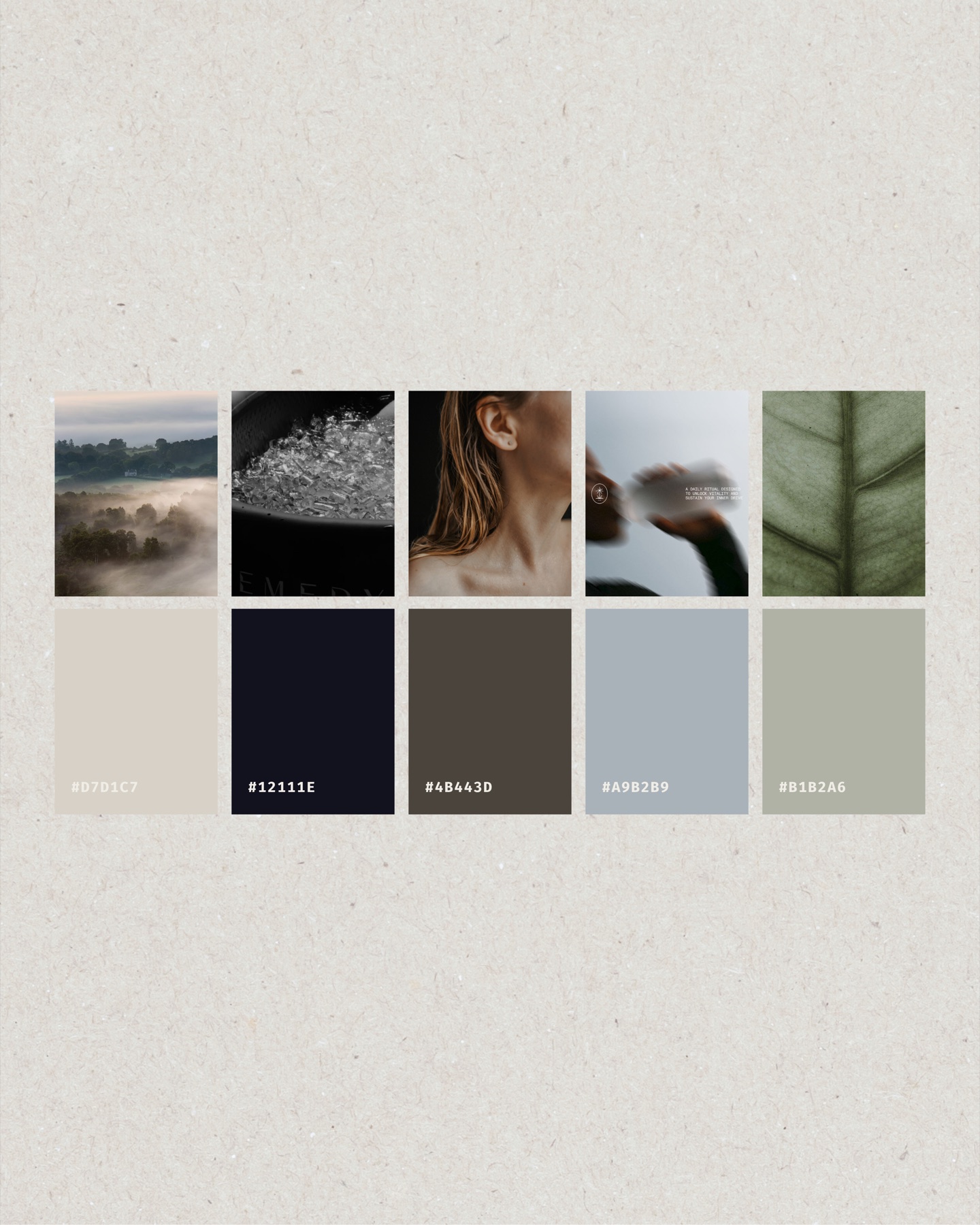
In sectors sold on how they make people feel, imagery does an enormous amount of the work. Considered, consistent photography sets the entire mood of a brand, often before a single word is read. It is also where many brands undo themselves: generic stock imagery flattens a brand instantly and signals a lack of care. Real, well-directed imagery, with a consistent light, palette and point of view, is one of the best investments a beauty or wellness brand can make, because it is doing the emotional selling on every channel at once.
Packaging and the physical touchpoints
For product brands in particular, packaging is not a container; it is one of the most powerful brand experiences you have. The weight of a jar, the texture of a label, the moment of opening, these are where a customer decides, physically, whether a brand feels premium and considered. Packaging that matches the brand world turns a purchase into a small ritual and a reason to repurchase.
Consistency that builds trust
Trust in these categories is fragile and slow to build, and consistency is how you build it. A brand that looks and sounds the same everywhere, from its website to its packaging to its social, feels dependable. Inconsistency, by contrast, reads as uncertainty, and uncertainty is the last thing a customer wants from something they put on their skin or into their daily routine. Consistency is not about being rigid; it is about being recognisably, reassuringly yourself in every place a customer meets you.
Branding and trust in a sensitive category
Beauty and wellness sit close to health, which raises the stakes on honesty. Overblown claims and borrowed hype may win a quick sale, but they erode the very trust the whole category depends on, and increasingly they attract regulatory attention. The most enduring brands practise restraint: they promise what they can genuinely deliver, and let the quality of the product and the experience speak for the rest. Restraint, in this context, is not timidity. It is confidence, and customers read it as such.
There is a practical dimension to protecting a brand, too. Once you have built a name and an identity worth protecting, it is worth registering a trade mark through the UK Intellectual Property Office, so the brand you have invested in cannot simply be copied by a competitor, which in a fast-moving, trend-led category is a real and common risk.
How branding builds desire
Desire, in beauty and wellness, is rarely about the ingredient list. It is about the story a customer tells themselves when they choose a brand: the version of their life, their routine, their self-image that the brand represents. Strong branding makes that story clear and attractive. It gives a customer a reason to want the brand before they have weighed a single feature, and that wanting is what premium pricing and genuine loyalty are built on. A brand that is merely useful competes on price. A brand that is desired competes on belonging.
How branding builds loyalty
Acquisition gets the attention, but loyalty is where beauty and wellness brands are actually built, because these are repeat-purchase categories. A customer who connects with a brand, who feels it understands them and consistently delivers, does not shop around every time. They repurchase, they recommend, and they forgive the occasional misstep. Branding is what turns a one-off buyer into that kind of customer, by making the relationship feel personal and worth staying in. The compounding value of loyalty, higher lifetime value, lower acquisition cost, genuine word of mouth, is one of the strongest commercial arguments for investing in brand.
The mistakes beauty and wellness brands make
The common ones are quietly expensive:
- Chasing trends instead of building a point of view. Trend-led brands date quickly and never build the deeper connection that loyalty requires.
- Copying a competitor. You inherit their positioning by accident and become a lesser version of someone else.
- Over-claiming. Spending trust faster than it is earned, and risking both reputation and regulatory trouble.
- Relying on generic stock imagery. It flattens the brand and undoes the emotional selling that photography should be doing.
- Treating the logo as the whole brand. A mark with no world around it has nothing for a customer to fall for.
- Inconsistency across touchpoints. It reads as uncertainty in a category where customers are already cautious.
Branding lets you charge your worth
A considered brand changes what a customer is willing to pay. When a beauty or wellness business looks and feels premium, consistent and credible, its price reads as justified rather than steep, and its customers return rather than defect to the next discount. Branding is how you move off the bottom of the market, where you compete only on price and always lose to someone cheaper, and build the kind of perceived value and loyalty that compounds over years. It is, as we have argued before, the secret weapon for small businesses, and nowhere is that truer than in beauty and wellness.
A considered approach to beauty and wellness branding
A strong beauty or wellness brand is built in a clear order: a point of view first, then a brand world that expresses it, then consistent application across every touchpoint a customer meets, held together by restraint and honesty. You do not need everything on day one. You need the essentials, done well and applied consistently, before anything decorative.
If your beauty or wellness brand is doing good work but not being read that way, the identity is usually where to start. You can see how we approach brand identity, look through some selected work, or tell us about your brand and we will give you an honest view of where it is holding you back.
The building blocks of a beauty brand identity
A brand world is made of parts, and in beauty and wellness each one carries real weight. It is worth understanding what they are and what each is for.
The name and positioning come first, because they shape everything after. The logo is the signature, but it is only one element and rarely the most important. Typography sets the voice before a word is read, whether the brand feels clinical, botanical, luxurious or playful. Colour carries enormous emotional weight in these categories and is often the fastest route to recognition. Photography and art direction establish the mood and do most of the emotional selling. And packaging and physical touchpoints, for product brands especially, turn the brand from an image into something a customer holds, opens and keeps. A considered identity treats all of these as one connected system, not a logo with some colours attached.
Brand guidelines and why they matter
A brand is only as strong as its consistency, and consistency is almost impossible to maintain by memory once more than one person is involved, or once the brand appears across a website, packaging, social, email and print at the same time. Brand guidelines, a clear reference for how the identity is used, are what keep a beauty or wellness brand recognisably itself as it grows. They cover how the logo is used, the typography and colour, the tone of voice, and how photography should look and feel.
Guidelines are not bureaucracy; they are what protect the investment you have made in the brand. Without them, a brand drifts: colours shift slightly, the tone wobbles, the imagery loses its consistency, and the carefully built sense of trust quietly erodes. With them, every new product, campaign and channel reinforces the same single, recognisable brand.
How to build a beauty or wellness brand, step by step
The order matters as much as the elements. A brand built in the wrong sequence tends to need redoing. A considered approach usually moves like this:
- Start with positioning. Decide who the brand is for, what it believes, and what makes it different. Everything later measures against this.
- Define the verbal identity. How the brand sounds, its tone and the language it uses, so it feels like one voice everywhere.
- Build the visual identity as a system. Logo, typography, colour and art direction, designed to work together across every touchpoint, not in isolation.
- Develop the photography and brand world. The mood, the light, the styling that will carry the emotional weight of the brand.
- Apply it to packaging and experience. The physical moments where the brand becomes real in a customer's hands.
- Document it in guidelines. So the brand stays consistent and strong as it scales.
You do not need to complete every step before you launch, but you do need the foundations, positioning and a coherent visual system, in place before you spend on marketing. Driving attention to a brand that is not ready to receive it is one of the most common and expensive mistakes in the sector.
Branding across the digital and physical worlds
A beauty or wellness brand lives in two worlds at once, and the strongest brands feel identical in both. Online, the brand shows up in the website, the social feed, the email and the product photography. In the physical world, it appears in the packaging, the unboxing, the clinic or retail space, and the in-person experience. A customer frequently moves between the two, discovering a brand on social, buying through a website, then holding the product in their hands, and any inconsistency between those moments reads as a crack in the brand's credibility.
This is why branding cannot be treated as a logo applied here and there. It is a complete, consistent world that has to hold together from a thumbnail on a phone to the weight of a jar on a bathroom shelf. When it does, every touchpoint reinforces the same feeling, and that accumulated consistency is what turns a brand from something a customer tried into something they trust.
Beauty and wellness branding, your questions answered
What is branding for a beauty or wellness brand?
It is the whole system that shapes how the brand is perceived: positioning, visual identity, tone of voice, photography, packaging and the feeling of the experience. In beauty and wellness, where decisions are personal and emotional, that perception is often what decides the sale.
Why does branding matter so much in beauty and wellness?
Because the products and treatments are often similar and the choice is deeply personal. When the practical differences are small, perception does the choosing, so a brand that feels calm, credible and desirable wins customers who could have gone anywhere, and keeps them.
What is a brand world?
A brand world is the full system around a brand, its colour, typography, photography, tone of voice, packaging and overall feeling, not just its logo. In beauty and wellness, the brand world is what people connect with emotionally, remember, and stay loyal to.
Can branding help a wellness brand charge more?
Yes. When a brand looks and feels premium, consistent and credible, its price reads as justified rather than steep. Strong branding moves a beauty or wellness business off the bottom of the market and builds the kind of loyalty and perceived value that support higher prices.
How does branding build customer loyalty?
By making the relationship feel personal and consistent. In repeat-purchase categories like beauty and wellness, a customer who connects with a brand repurchases, recommends and forgives the occasional misstep, rather than shopping around every time. That loyalty compounds into higher lifetime value and genuine word of mouth.
How do I make my beauty brand stand out?
Start with a clear point of view, build a consistent brand world rather than just a logo, invest in real photography, and practise restraint with your claims. Standing out in beauty and wellness comes from being unmistakably yourself, consistently, not from chasing trends.
A beauty brand people fall for.
If your brand is doing good work but not being read that way, the identity is usually where to start. Explore our brand identity service, see some selected work, or tell us about your brand.
Start a project →